
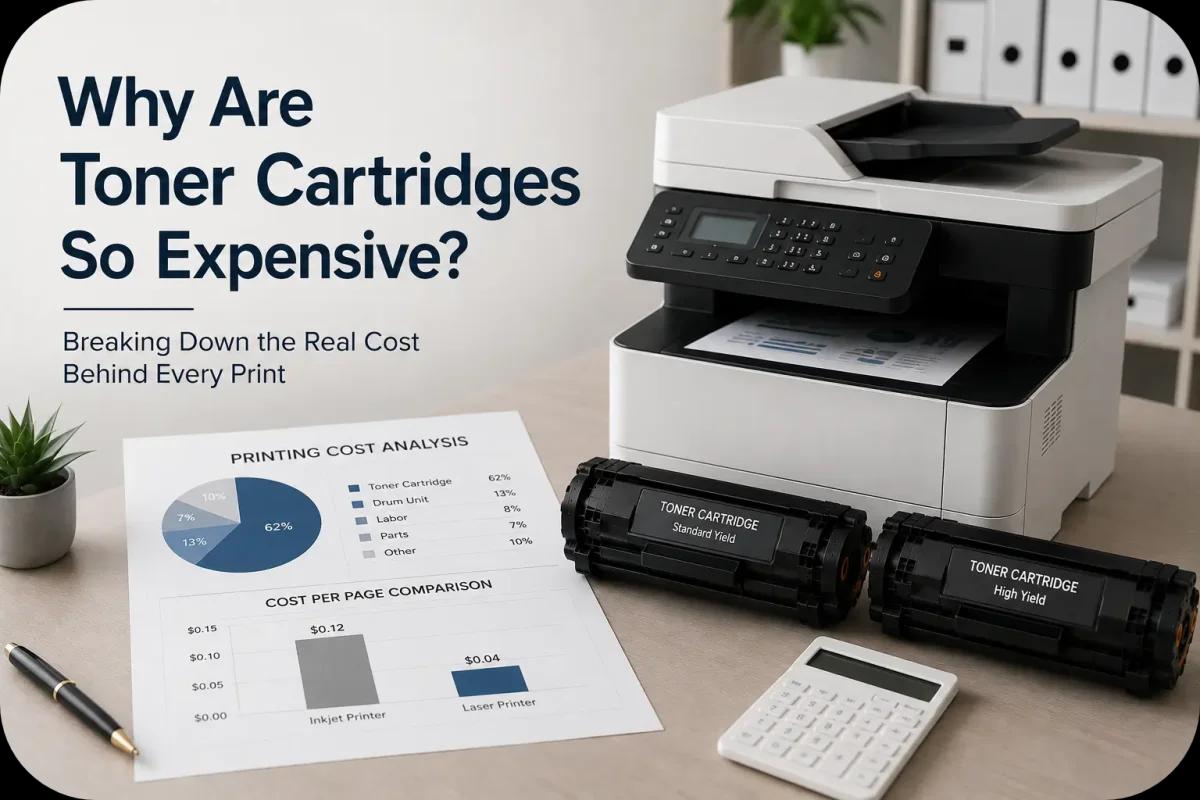
Why Are Toner Cartridges So Expensive?
Many printer users eventually ask the same question: why are toner cartridges so expensive? Whether for home offices, schools, or large businesses, replacing toner cartridges can feel surprisingly costly compared to the printer itself. In fact, some printers are sold at relatively low prices while replacement toner cartridges carry much higher long term costs.
However, toner cartridges are far more advanced than they appear. Modern toner cartridges contain sophisticated components, specialized toner formulas, smart technology, and precision engineering designed to produce fast, reliable, and high quality printing. In addition, manufacturing, research, compatibility testing, and supply chain costs all contribute to toner cartridge pricing.
Understanding why toner cartridges cost more can help users make smarter printing decisions and better manage long term printing expenses.
Toner Cartridges Are More Complex Than They Look
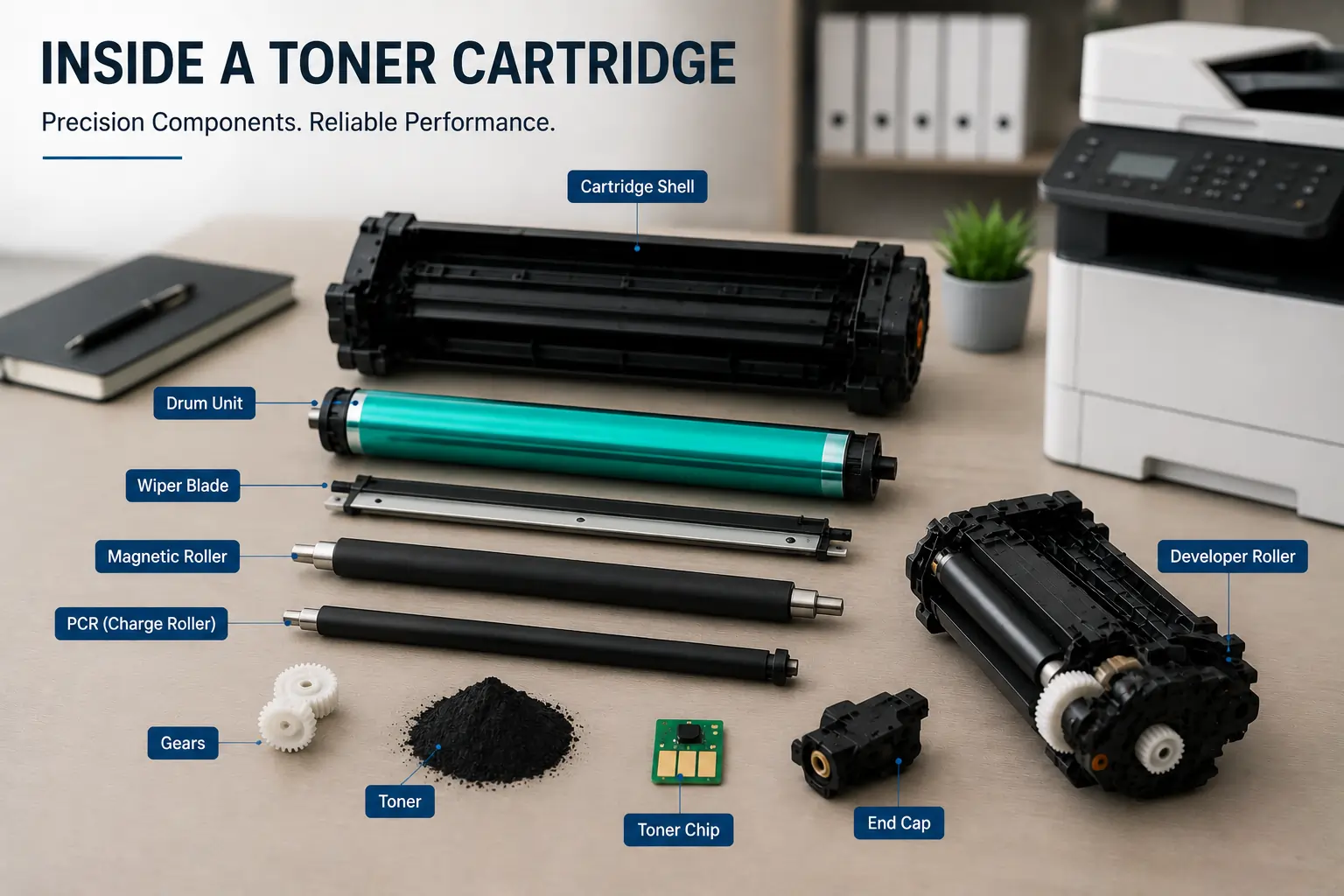
Many people assume toner cartridges are simply containers filled with toner powder. However, modern toner cartridges contain several precision engineered components that work together during printing.
These components often include:
- Drum units
- Magnetic rollers
- Wiper blades
- Toner reservoirs
- Smart toner chips
- Seals and gears
Each part must function accurately to produce clean and professional quality prints.
Because of this complexity, toner cartridges require advanced manufacturing and quality control processes.
Toner Powder Is Highly Specialized
Toner powder is not ordinary dust or ink. Manufacturers develop toner formulas carefully to ensure:
- Sharp text
- Consistent print quality
- Fast drying performance
- Proper toner bonding
- Reliable printer compatibility
Modern toner powder contains:
- Fine plastic particles
- Pigments
- Magnetic materials
- Charge control additives
In addition, toner particles must maintain consistent size and composition to avoid print defects.
As a result, toner production requires advanced research and manufacturing technology.
Research and Development Increase Costs
Printer manufacturers invest heavily in research and development for toner cartridge technology.
Companies continuously improve:
- Print quality
- Toner efficiency
- Cartridge lifespan
- Energy efficiency
- Leak prevention
- Smart monitoring systems
Modern toner cartridges also include features such as:
- Toner level tracking
- Cartridge authentication
- Printer communication chips
Therefore, ongoing innovation contributes to toner cartridge pricing.
Toner Cartridge Chips Add Technology Costs
Many modern toner cartridges include smart electronic chips.
These chips help:
- Monitor toner levels
- Verify compatibility
- Track page count
- Communicate with the printer
Although these chips improve printer management, they also increase manufacturing costs.
In addition, some printer manufacturers use proprietary chip systems that limit compatibility with certain third party cartridges.
Manufacturers Often Earn More from Toner Than Printers
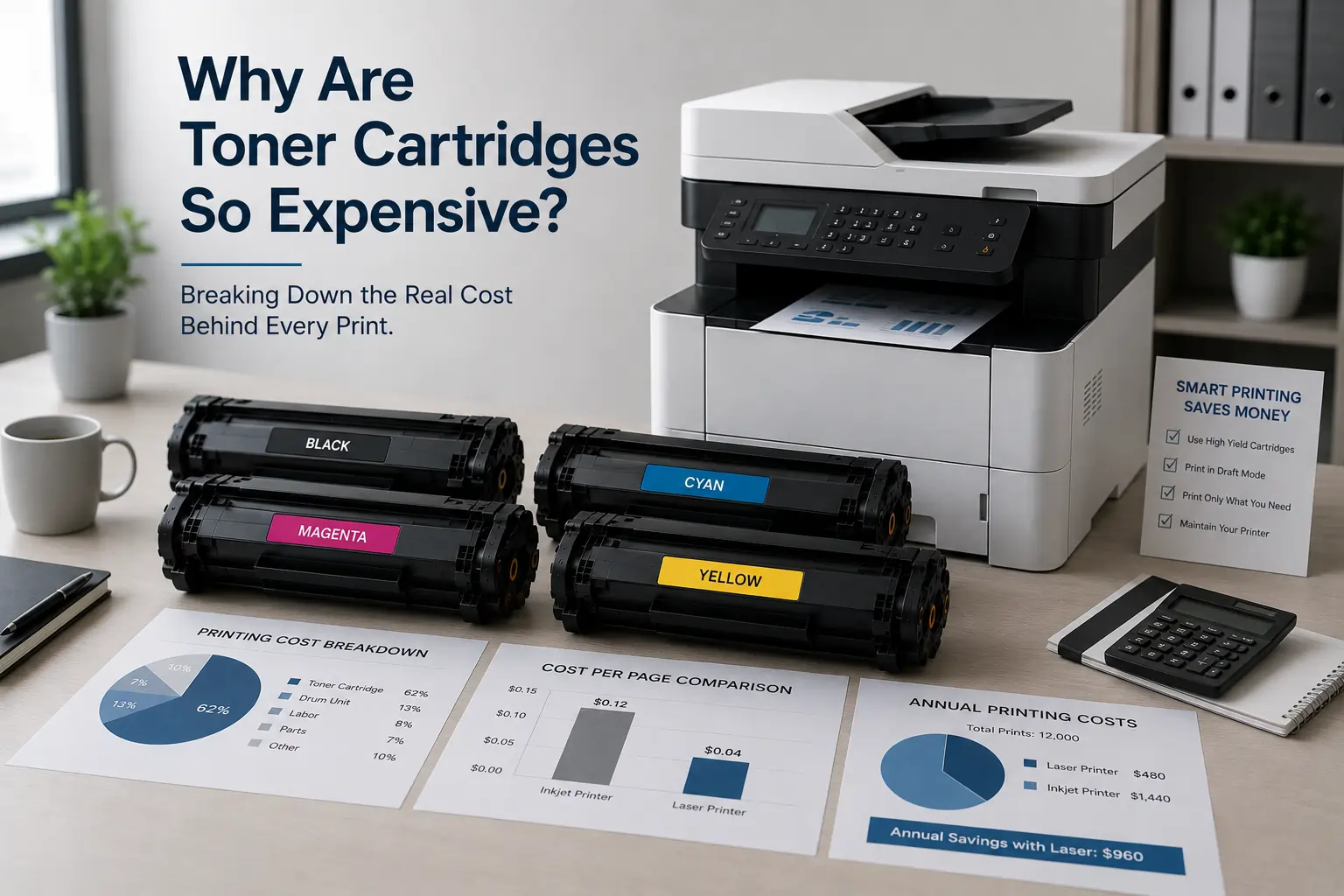
One major reason toner cartridges seem expensive is the business model used by many printer manufacturers.
Printers Are Often Sold at Lower Margins
Some printers are sold at relatively affordable prices to encourage buyers to enter the manufacturer’s printing ecosystem.
Toner Sales Generate Long Term Revenue
Printer companies often recover profits through ongoing toner cartridge sales over time.
This business strategy is sometimes compared to:
- Razors and replacement blades
- Coffee machines and coffee pods
As a result, toner cartridges may carry higher profit margins than printers themselves.
Compatibility Testing and Quality Control Matter
Reliable toner cartridges must undergo extensive testing before release.
Manufacturers test cartridges for:
- Printer compatibility
- Toner flow consistency
- Print quality
- Heat resistance
- Leak prevention
- Durability
Because laser printers use heat and precision imaging systems, poor quality cartridges may damage printers or reduce print quality.
Therefore, strict quality control contributes to higher production costs.
OEM vs Compatible Toner Cartridge Pricing
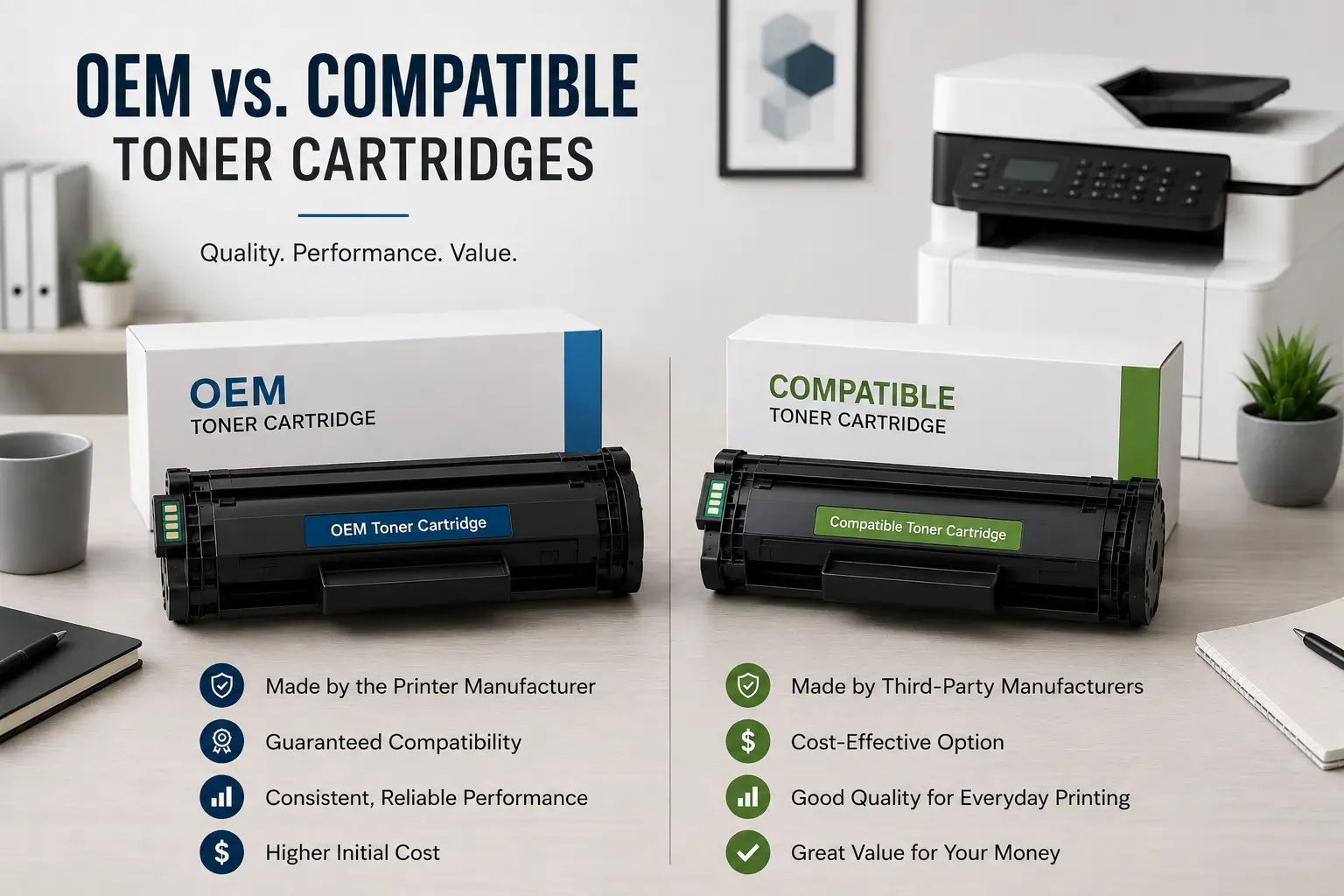
There are major pricing differences between OEM and compatible toner cartridges.
OEM Toner Cartridges
OEM cartridges come directly from the printer manufacturer.
Advantages include:
- Guaranteed compatibility
- Consistent print quality
- Manufacturer support
However, OEM cartridges are usually more expensive.
Compatible Toner Cartridges
Compatible cartridges are produced by third party manufacturers.
Advantages may include:
- Lower prices
- Competitive print quality
- Wider affordability
However, quality varies depending on the supplier.
Businesses and home users looking for dependable toner supplies can explore compatible toner cartridge options from Toner Connect.
High Yield Toner Cartridges Offer Better Long Term Value
Although toner cartridges may appear expensive upfront, high yield cartridges often reduce cost per page over time.
High Yield Benefits
High yield cartridges:
- Print more pages
- Require fewer replacements
- Reduce office interruptions
- Lower long term printing costs
Therefore, businesses with high printing demands often choose high yield cartridges for better efficiency.
Environmental and Recycling Costs Also Play a Role
Modern toner cartridge manufacturing also includes environmental considerations.
Many manufacturers invest in:
- Cartridge recycling programs
- Sustainable packaging
- Recyclable materials
- Remanufacturing initiatives
These programs help reduce waste but may also increase production and logistics costs.
However, they support more environmentally responsible printing practices.
Counterfeit Cartridges Create Industry Challenges
Counterfeit toner cartridges remain a growing problem worldwide.
Fake cartridges may:
- Produce poor print quality
- Leak toner
- Damage printers
- Fail prematurely
Because of this, legitimate manufacturers spend additional resources on:
- Security labeling
- Anti counterfeit technology
- Product verification systems
These protections also contribute to cartridge pricing.
How to Reduce Toner Cartridge Costs?
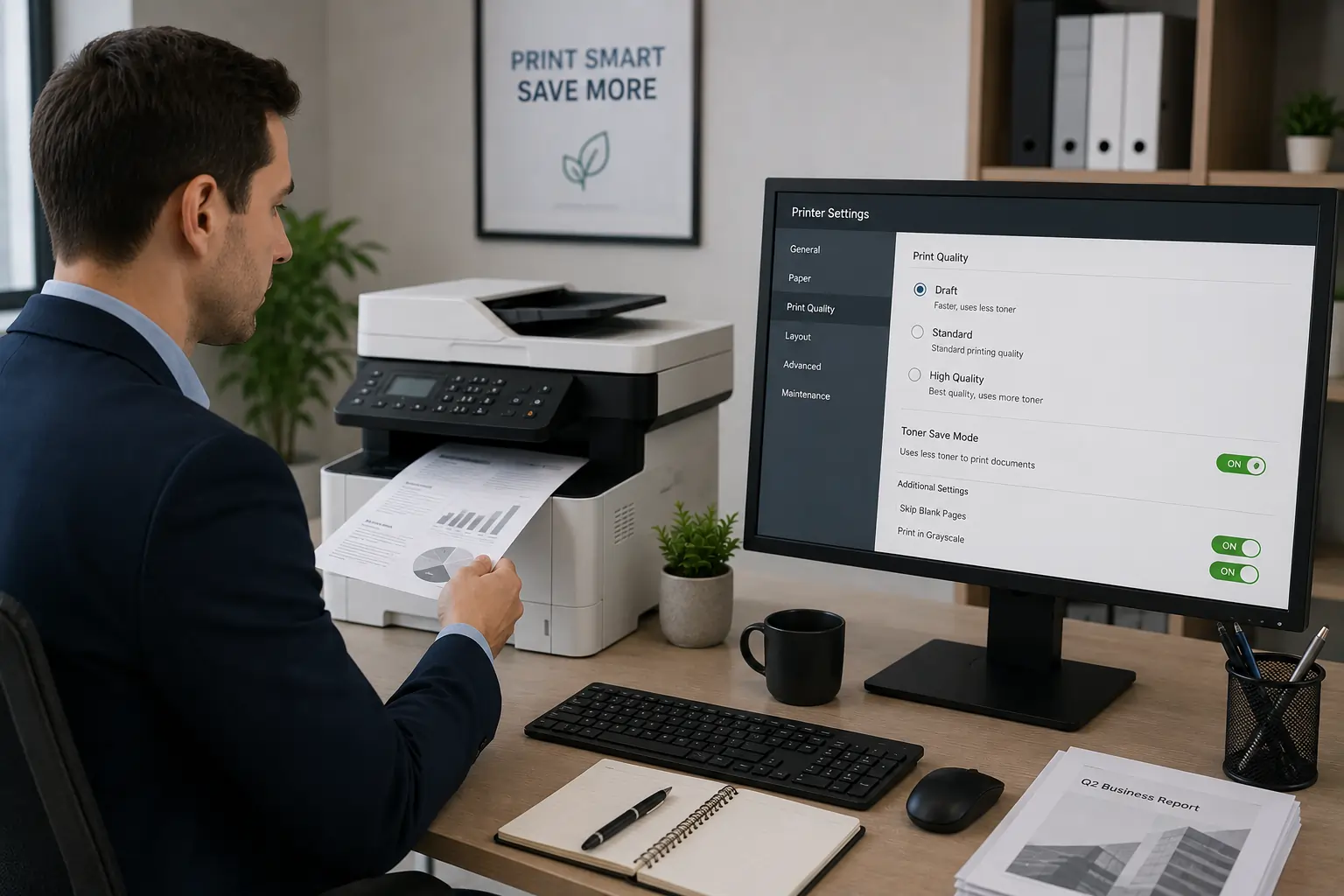
Although toner cartridges can be expensive, several strategies may help reduce printing costs.
Use High Yield Cartridges
High yield options often lower cost per page.
Print in Draft Mode
Draft mode reduces toner usage for internal documents.
Print Only Necessary Pages
Reducing unnecessary printing helps extend cartridge lifespan.
Maintain the Printer Properly
Regular cleaning and maintenance improve toner efficiency.
Buy from Trusted Suppliers
Reliable suppliers help reduce the risk of low quality or counterfeit cartridges.
Modern Printing Technology Continues Improving Efficiency
New toner cartridge technologies continue improving printing efficiency and reducing waste.
Modern innovations include:
- Smarter toner monitoring
- Improved toner formulas
- Better leak prevention
- More energy efficient printing
- Advanced toner flow systems
As printing technology evolves, manufacturers continue balancing performance, sustainability, and cost management.
According to HP and Canon printing resources, future toner cartridge technology will focus heavily on efficiency, sustainability, and smarter print management systems.
Conclusion
Toner cartridges are expensive because they combine advanced engineering, specialized toner formulas, smart technology, quality control, and ongoing research into one highly precise printing component. In addition, printer manufacturers often rely on toner sales for long term revenue. While toner cartridge prices may seem high initially, understanding toner yield, print habits, and cartridge quality can help users reduce long term printing costs and improve overall printing efficiency.