
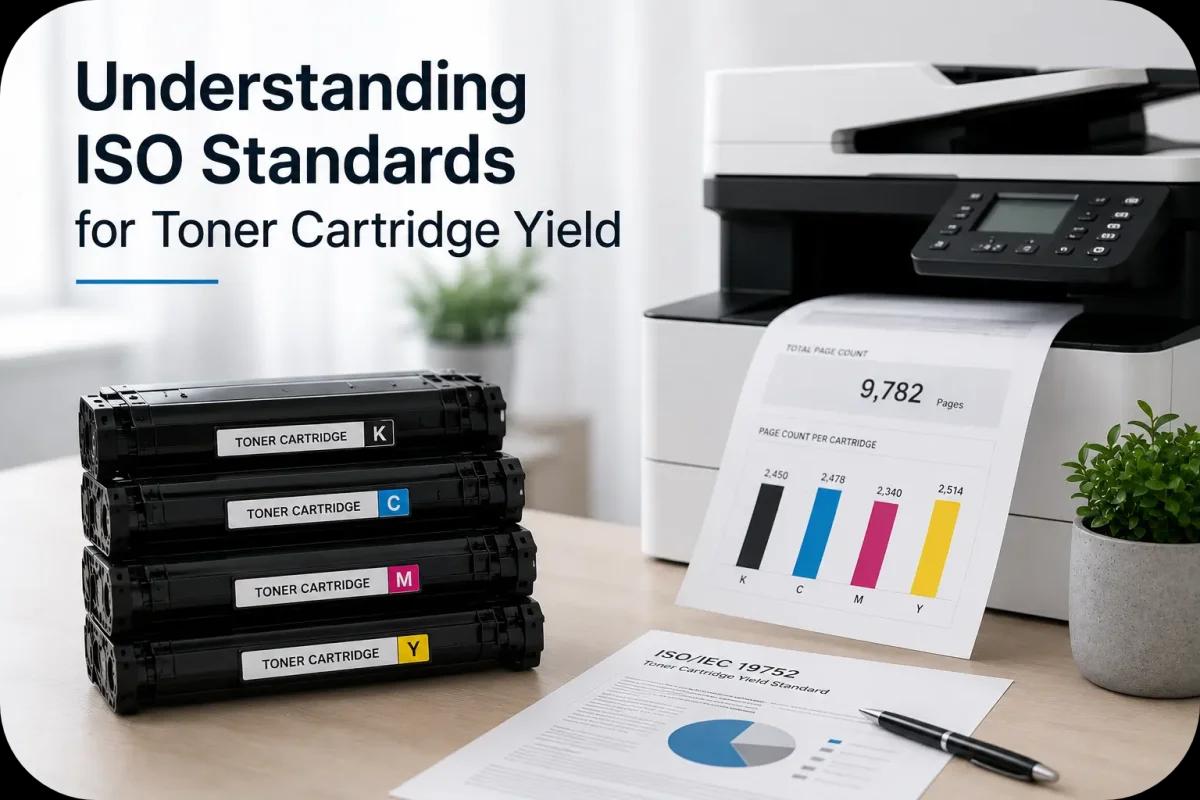
Understanding ISO Standards for Toner Cartridge Yield
When shopping for toner cartridges, one of the most common specifications buyers notice is page yield. Toner cartridge packaging often includes estimated page counts such as 1,500 pages, 3,000 pages, or even 10,000 pages. However, many users wonder how these numbers are calculated and whether they reflect real world printing results.
This is where ISO standards for toner cartridge yield become important. ISO standards help create consistent testing methods that allow manufacturers and consumers to measure toner cartridge performance more accurately. By understanding how ISO page yield standards work, businesses and home users can make smarter printing decisions and compare toner cartridges more fairly.
Whether you use standard or high yield toner cartridges, knowing how page count ratings are determined can help you better estimate printing costs and cartridge lifespan.
What Is Toner Cartridge Yield?
Toner cartridge yield refers to the estimated number of pages a toner cartridge can print before replacement becomes necessary.
Manufacturers usually determine cartridge yield through standardized testing procedures. These tests measure how many pages the cartridge can produce under controlled printing conditions.
Toner cartridge yield helps users:
- Estimate printing costs
- Compare cartridge options
- Plan office supply budgets
- Measure printer efficiency
However, actual page output may vary depending on printing habits and document types.
What Are ISO Standards for Toner Cartridge Yield?
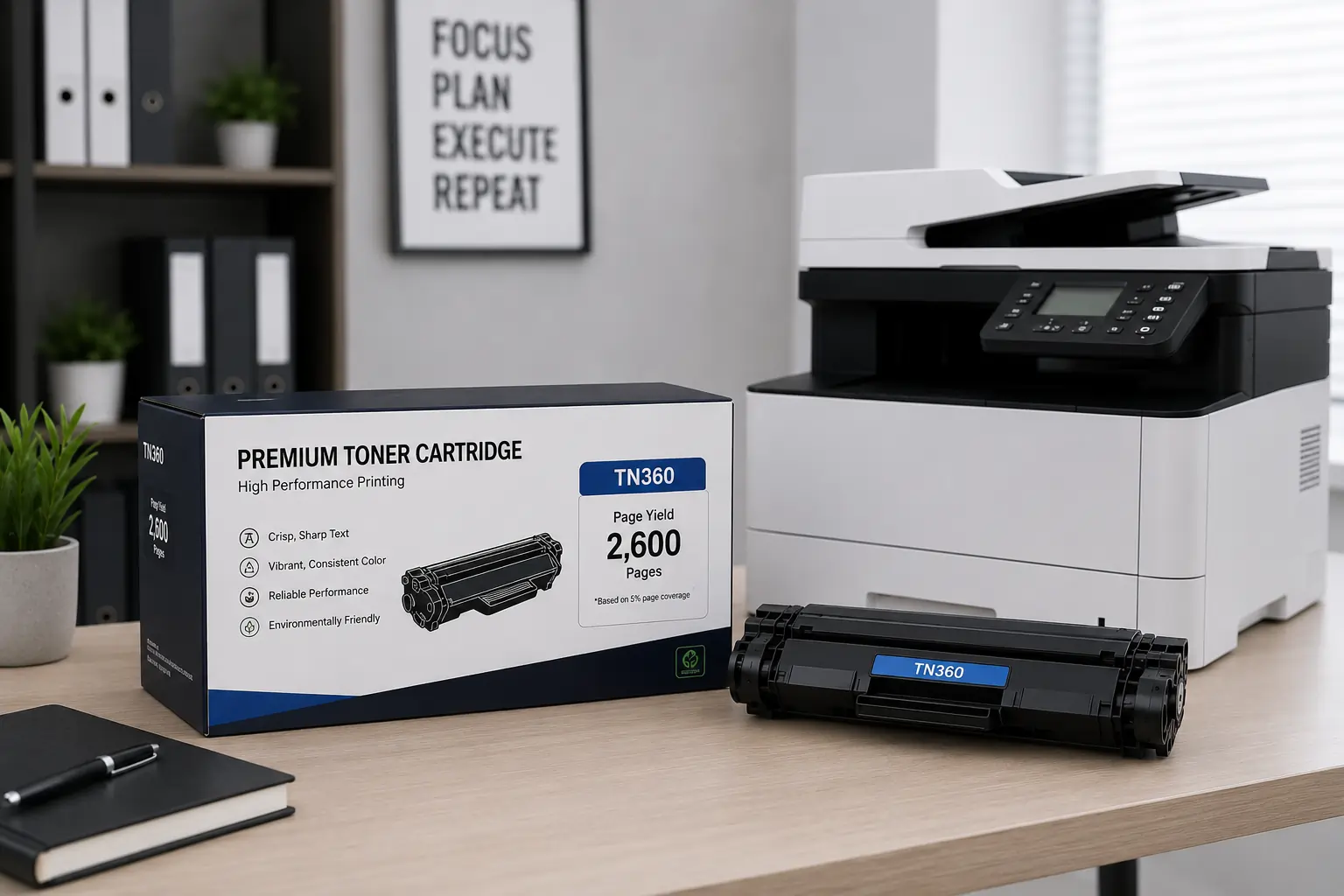
ISO stands for the International Organization for Standardization. This organization develops global standards for many industries, including printing technology.
For toner cartridges, ISO standards provide:
- Consistent testing methods
- Fair page yield measurements
- Reliable comparison guidelines
- Standardized printing conditions
As a result, buyers can compare toner cartridge performance more accurately across different brands and models.
Why ISO Standards Matter?
Before ISO testing standards became common, manufacturers sometimes used different methods to estimate toner cartridge page counts. Because of this, comparing cartridge performance was often confusing.
ISO standards help create more transparency by:
- Standardizing testing procedures
- Reducing misleading page yield claims
- Improving buyer confidence
- Supporting fair product comparisons
Therefore, ISO standards help consumers understand toner cartridge efficiency more clearly.
The Most Common ISO Standards for Toner Cartridge Yield
Several ISO standards apply to printing supplies.
ISO/IEC 19752
ISO/IEC 19752 is the primary standard for monochrome toner cartridges used in laser printers.
This standard measures:
- Black toner cartridge page yield
- Consistent print testing procedures
- Standardized print coverage levels
ISO/IEC 19798
ISO/IEC 19798 applies to color toner cartridges.
It measures:
- Cyan, magenta, yellow, and black cartridge yields
- Combined color printing performance
- Standardized color print conditions
ISO/IEC 24711
Although mainly used for ink cartridges, this standard measures page yield for certain ink based printing systems.
These standards help manufacturers publish more consistent page count estimates.
How ISO Page Yield Testing Works?
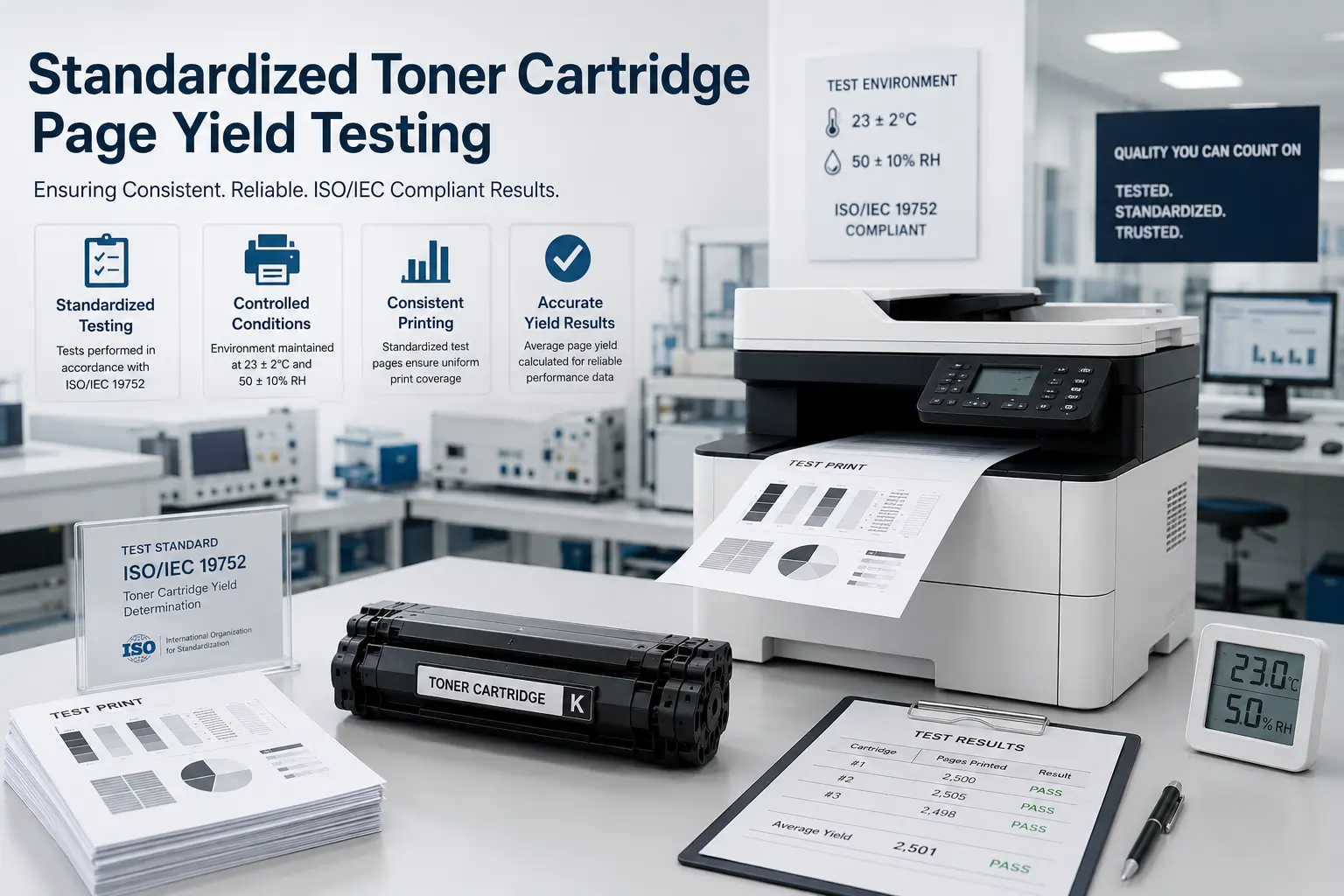
ISO yield testing follows controlled procedures to ensure consistency.
Standardized Print Coverage
Most ISO yield tests use approximately 5% page coverage.
This means:
- Only about 5% of the page contains printed content
- Coverage often reflects average business documents
- Heavy graphics or images are usually not included
Continuous Printing Conditions
Printers operate under controlled settings during testing to maintain consistency.
Specific Paper and Printer Settings
Testing environments use standardized:
- Paper types
- Temperature conditions
- Humidity levels
- Print settings
Because of these controls, ISO standards create fair comparisons between cartridges.
Why Real World Page Yield May Differ?
Although ISO standards improve consistency, actual page yield often varies in everyday use.
Print Coverage Differences
Documents with:
- Large graphics
- Photos
- Bold text
- Heavy black printing
consume more toner than standard test pages.
Printer Usage Habits
Frequent short print jobs may use more toner during startup cycles.
Environmental Conditions
Heat, humidity, and printer maintenance can affect toner efficiency.
Printer Settings
High quality print modes often consume more toner than draft or standard modes.
Therefore, actual page count may be lower or higher than ISO estimates depending on usage patterns.
Standard Yield vs High Yield Toner Cartridges
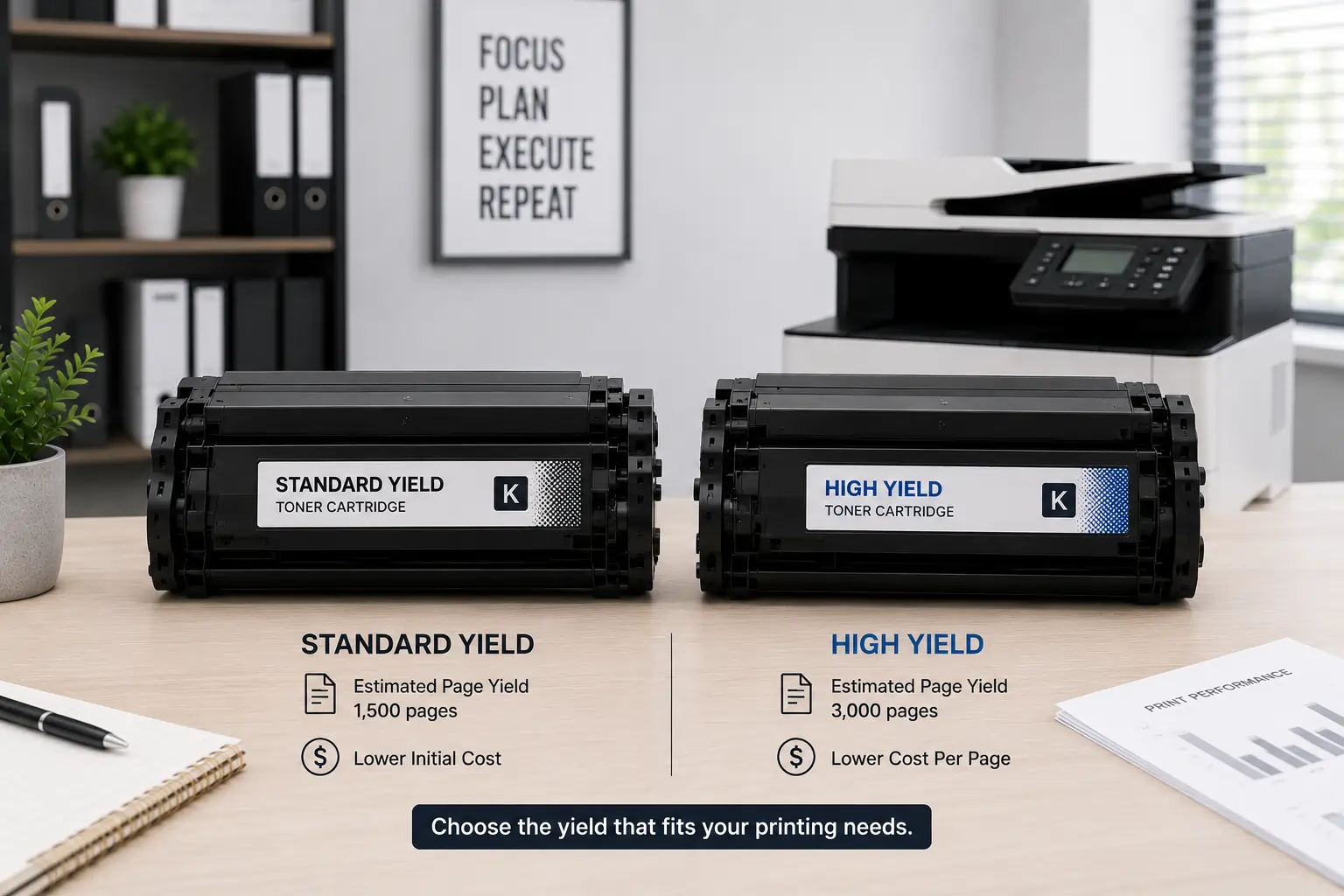
ISO standards apply to both standard and high yield cartridges.
Standard Yield Cartridges
Standard yield cartridges:
- Cost less upfront
- Print fewer pages
- Work well for low volume printing
High Yield Cartridges
High yield cartridges:
- Print more pages
- Lower cost per page
- Reduce replacement frequency
Businesses with heavy printing needs often prefer high yield cartridges for better long term value.
Users looking for reliable toner cartridge options can explore products from Toner Connect for both standard and high yield printing supplies.
How to Use ISO Yield Information When Buying Toner Cartridges?

Understanding page yield ratings can help buyers make smarter purchasing decisions.
Compare Cost Per Page
Instead of only comparing cartridge prices, divide the cartridge cost by estimated page yield.
Consider Printing Volume
High volume offices may benefit from higher yield cartridges even if the upfront cost is greater.
Match Cartridge Type to Usage
Home users may not need extremely high yield cartridges if printing demands remain low.
Buy from Trusted Suppliers
Reliable toner suppliers usually provide accurate compatibility and yield information.
Common Misunderstandings About Toner Cartridge Yield
Some users misunderstand what page yield numbers actually represent.
Yield Is an Estimate
ISO page yield numbers are estimates under controlled conditions, not guaranteed exact results.
Real Printing Habits Matter
Documents with graphics, logos, or large text areas may reduce cartridge lifespan faster.
Cartridge Quality Affects Performance
Low quality or counterfeit cartridges may not achieve advertised yield levels.
Because of this, choosing dependable toner products remains important.
The Future of Toner Cartridge Yield Standards
Printing technology continues evolving, and yield measurement systems may improve further in the future.
Possible developments include:
- Smarter toner monitoring systems
- Real time page yield tracking
- AI based print usage analysis
- More environmentally focused efficiency standards
As printing becomes more advanced, toner cartridge yield information will likely become even more accurate and user friendly.
According to HP and Canon printer resources, ISO testing standards remain important for helping consumers compare toner cartridge performance fairly.