
Smart Policies for Schools & Government: Selling Surplus Toner the Right Way
Schools and government offices manage large volumes of printer supplies every year. Between bulk purchasing, grant funding cycles, and equipment upgrades, it’s common to end up with excess inventory. Instead of letting supplies sit in storage, or worse, expire, there’s a smarter solution: selling surplus toner the right way.
With clear policies and proper procedures, institutions can recover budget dollars, reduce waste, and stay compliant with procurement regulations. This guide outlines how schools and government agencies can approach toner resale responsibly and efficiently.
Why Surplus Toner Happens in Public Institutions?
Surplus toner is more common than many administrators realize. It often results from:
- District-wide printer upgrades
- Department consolidations
- Overestimating annual supply needs
- Emergency bulk purchasing
- Changes in approved vendor contracts
Because public institutions often purchase in bulk for cost savings, even minor usage shifts can leave hundreds of unused cartridges behind.
Over time, these sealed OEM cartridges lose value if they sit too long. Selling them proactively protects taxpayer-funded budgets.
Why Selling Surplus Toner Makes Financial Sense?
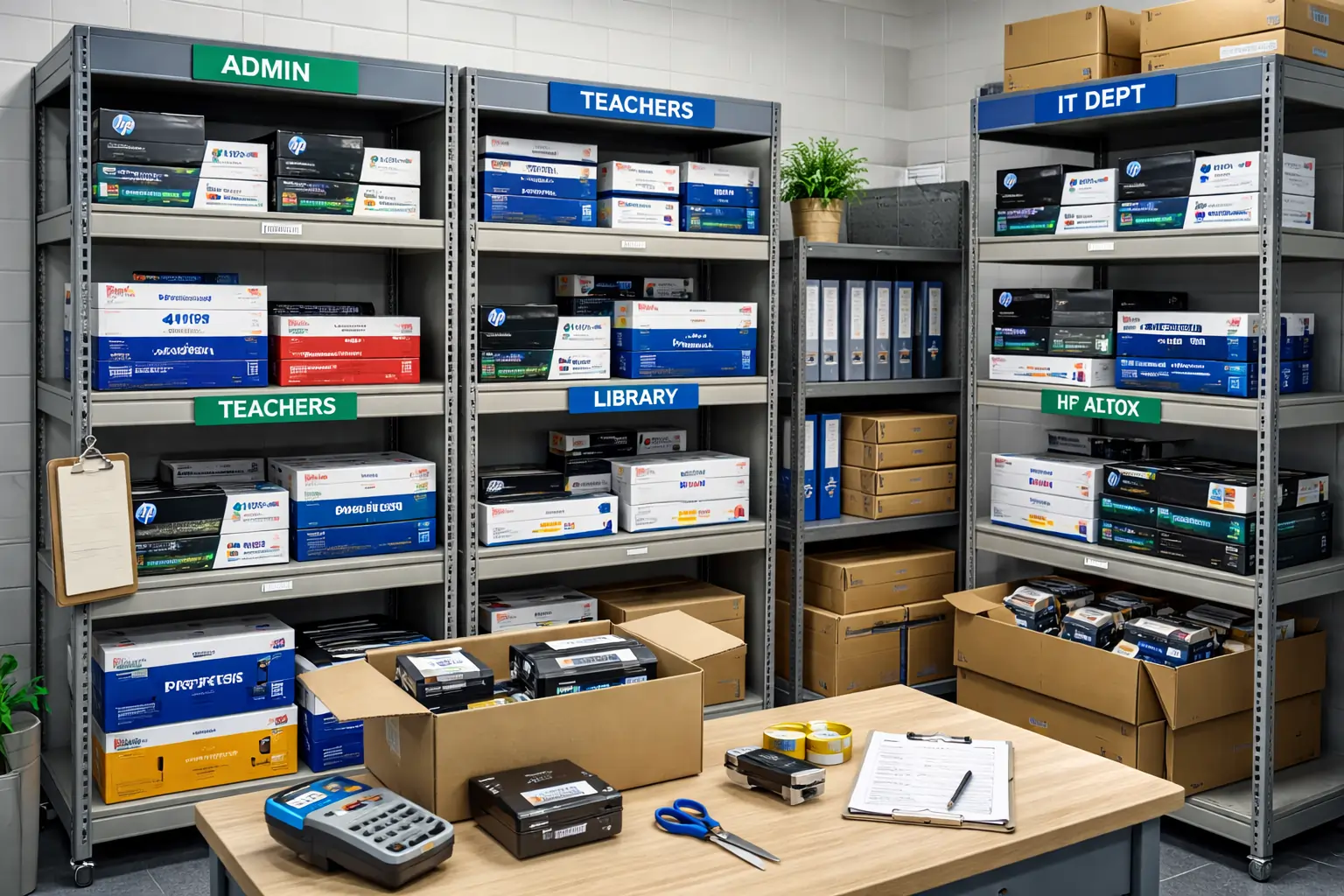
When schools and agencies recover funds from unused toner, they can:
- Reallocate money to classroom programs
- Support IT upgrades
- Offset supply budgets
- Reduce waste disposal costs
According to the U.S. Environmental Protection Agency (EPA), reusing office supplies supports waste reduction and sustainability initiatives.
Instead of writing off excess toner as a loss, resale transforms unused inventory into recovered funds.
Compliance First: Understanding Policy Requirements
Before selling surplus toner, schools and government agencies must ensure compliance with internal policies and public asset regulations.
Common requirements include:
Asset Review and Approval
Confirm toner inventory is no longer needed and officially designated as surplus property.
Documentation
Maintain records of:
- Original purchase details
- Inventory counts
- Disposal authorization
- Resale transaction records
Procurement or Finance Oversight
Many districts require approval from procurement or finance departments before disposing of surplus assets.
Transparency is critical when dealing with taxpayer-funded materials.
Selling Surplus Toner the Right Way: Step-by-Step Process
Here’s a structured approach institutions can follow.
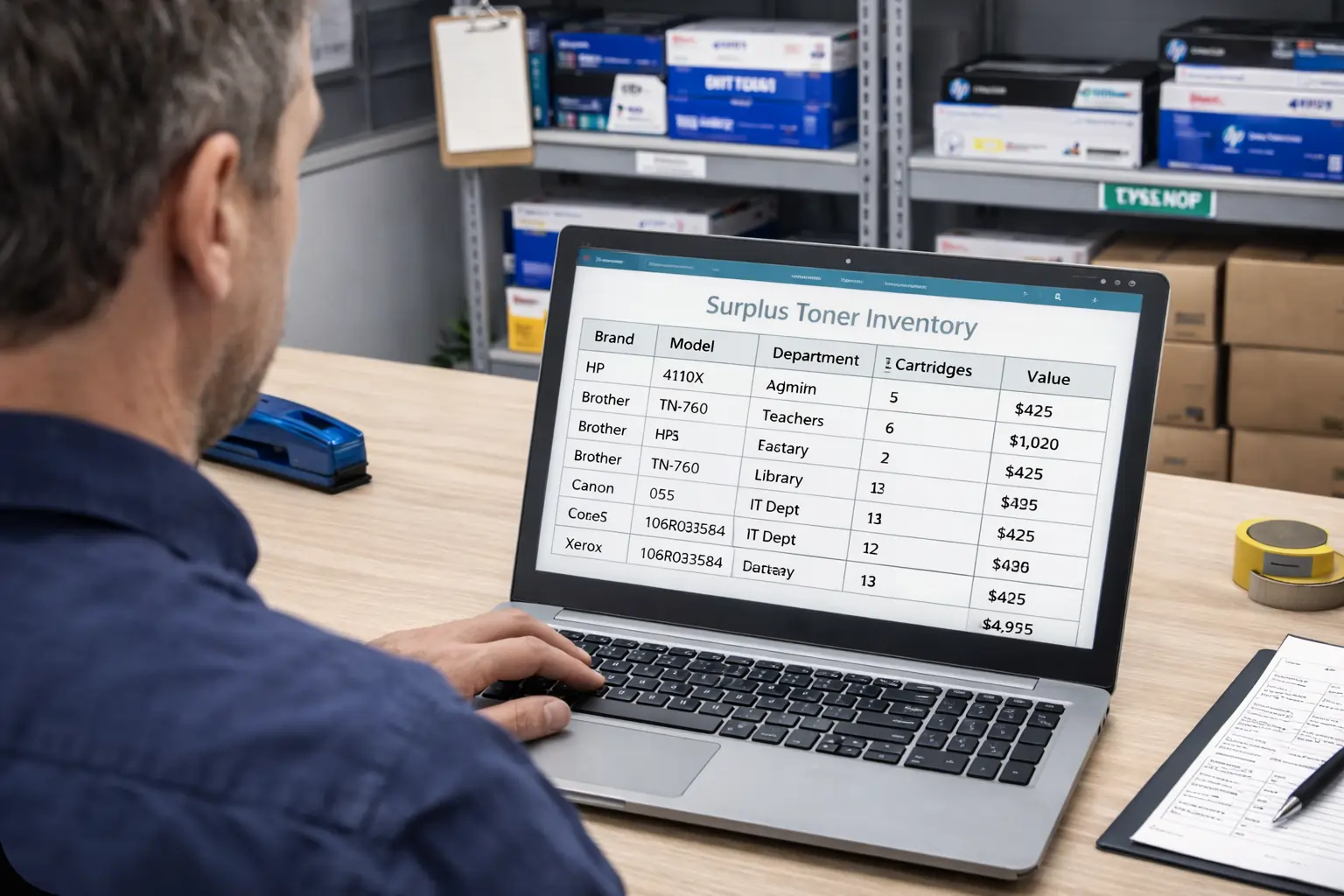
Step 1: Conduct a Surplus Inventory Audit
Identify:
- Brand and model numbers
- Quantity available
- Condition (sealed, unopened)
- Expiration dates
Focus on OEM cartridges in original packaging, as they typically hold the highest resale value.
Step 2: Verify Printer Fleet Compatibility
Ensure the toner is no longer needed for any active printers across departments. Sometimes surplus in one building may still be usable in another.
Step 3: Choose the Right Selling Method
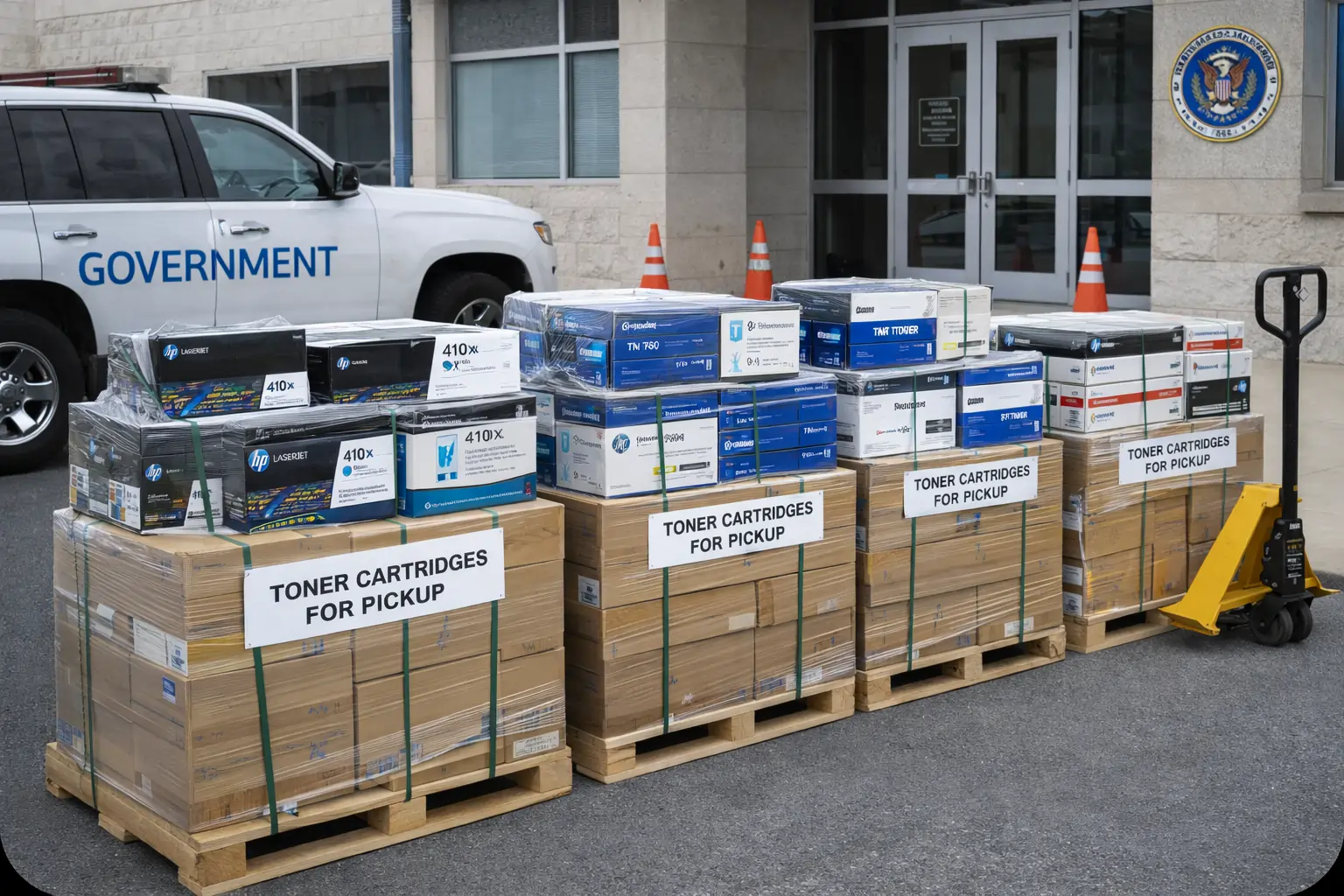
There are several ways to sell surplus toner:
- Public auction platforms
- Government surplus marketplaces
- Direct toner buyback companies
For many institutions, working with a specialized buyer simplifies the process.
Platforms like Toner Connect focus specifically on purchasing unused toner inventory, which reduces administrative workload.
Step 4: Request a Quote
Submit model numbers and quantities to a reputable toner buyer.
Request a quote directly at Toner Connect.
This allows institutions to evaluate potential recovery value before committing.
Step 5: Maintain Full Documentation
Keep records of:
- Quote approval
- Shipment tracking
- Payment confirmation
- Revenue allocation
Clear documentation supports audit readiness and financial transparency.
Why Dedicated Toner Buyers Work Well for Schools & Agencies?
While auction sites may offer competitive pricing, they also require:
- Listing management
- Buyer interaction
- Shipping coordination
- Fee structures
- Return handling
For public institutions with limited administrative bandwidth, specialized buyback platforms provide:
- Direct quotes
- Bulk inventory support
- Clear payment terms
- Simplified transactions
This reduces the burden on IT and procurement teams.
Environmental and Sustainability Benefits
Many schools and government agencies have sustainability goals.
Selling unused toner:
- Prevents landfill waste
- Supports product reuse
- Reduces unnecessary manufacturing
- Contributes to circular economy initiatives
The General Services Administration (GSA) also promotes sustainable procurement practices across federal agencies.
Responsible resale aligns with these environmental objectives.
Common Mistakes to Avoid
When selling surplus toner, avoid these pitfalls:
Waiting Too Long
Toner can lose resale value if near expiration.
Poor Storage Conditions
Damaged packaging reduces payout.
Lack of Internal Communication
Ensure all departments confirm toner is truly surplus.
Incomplete Documentation
Missing records can complicate audits.
Proactive planning prevents compliance headaches later.
Building a Long-Term Surplus Toner Policy
Instead of treating toner resale as a one-time event, schools and agencies can create a standing policy:
- Conduct quarterly inventory audits
- Track printer fleet changes
- Forecast supply needs more accurately
- Establish approved resale vendors
- Integrate resale into asset management procedures
By formalizing the process, institutions reduce waste and maximize taxpayer value.

Final Thoughts
Selling surplus toner the right way allows schools and government agencies to recover funds responsibly while staying compliant with internal policies.
With proper documentation, transparent approvals, and the right resale partner, unused toner becomes an opportunity rather than a storage problem.
Instead of letting valuable supplies expire on a shelf, institutions can turn surplus toner into recovered budget dollars, supporting both financial stewardship and sustainability goals.