
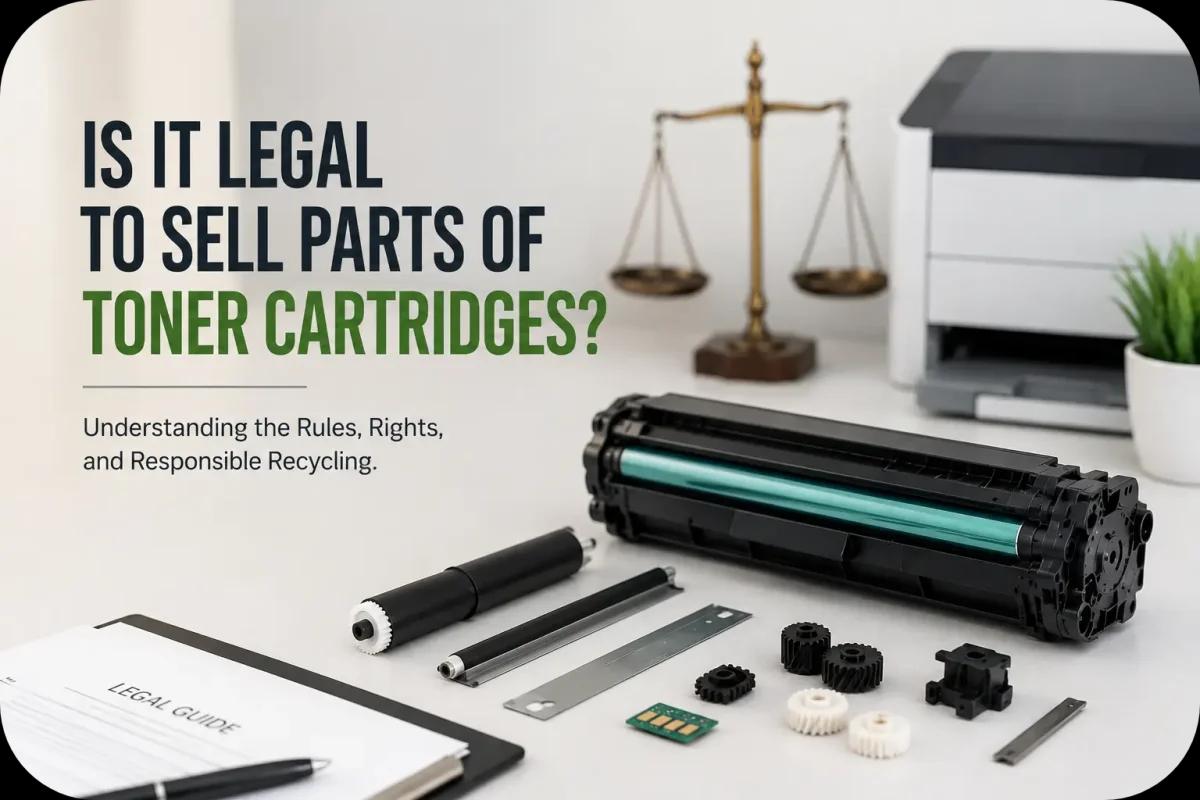
Is It Legal to Sell Parts of Toner Cartridges?
As sustainability and printer recycling continue growing in importance, many businesses and individuals are asking an interesting question: is it legal to sell parts of toner cartridges? The short answer is yes, in many cases it is legal to sell reusable toner cartridge parts, especially when they are recovered through recycling, remanufacturing, or surplus inventory programs.
Toner cartridges contain several valuable components that can often be reused, refurbished, or resold for repair and remanufacturing purposes. From drum units and rollers to gears and smart chips, many internal cartridge parts still hold value even after the cartridge itself is no longer fully functional.
Understanding how toner cartridge parts are reused and sold can help businesses support sustainable printing while reducing electronic waste.
Why Toner Cartridge Parts Have Value?
Modern toner cartridges contain multiple precision engineered components that are designed for durability and long term performance.
Some of the most valuable toner cartridge parts include:
- Drum units
- Magnetic rollers
- Wiper blades
- Gears and springs
- Cartridge chips
- Plastic housing components
Even when a toner cartridge is empty, some internal parts may still remain functional and reusable.
This creates opportunities for:
- Printer repair businesses
- Remanufacturing companies
- Recycling centers
- Printer supply resellers
Is It Legal to Sell Toner Cartridge Parts?
In general, selling toner cartridge parts is legal when the parts are obtained through lawful ownership, recycling programs, or remanufacturing operations.
Legally Owned Cartridges
If a business or individual legally owns used toner cartridges, they may usually resell reusable components or refurbished parts.
Remanufacturing Industry Practices
Many remanufacturing companies legally recover toner cartridge parts to:
- Rebuild cartridges
- Repair damaged units
- Reduce manufacturing waste
Recycling and Sustainability Programs
Recycling companies often separate reusable parts from damaged or discarded cartridges before resale or reuse.
However, sellers should avoid:
- Selling counterfeit branded products
- Misrepresenting used parts as new OEM products
- Violating trademark or intellectual property laws
Commonly Sold Parts of Toner Cartridges
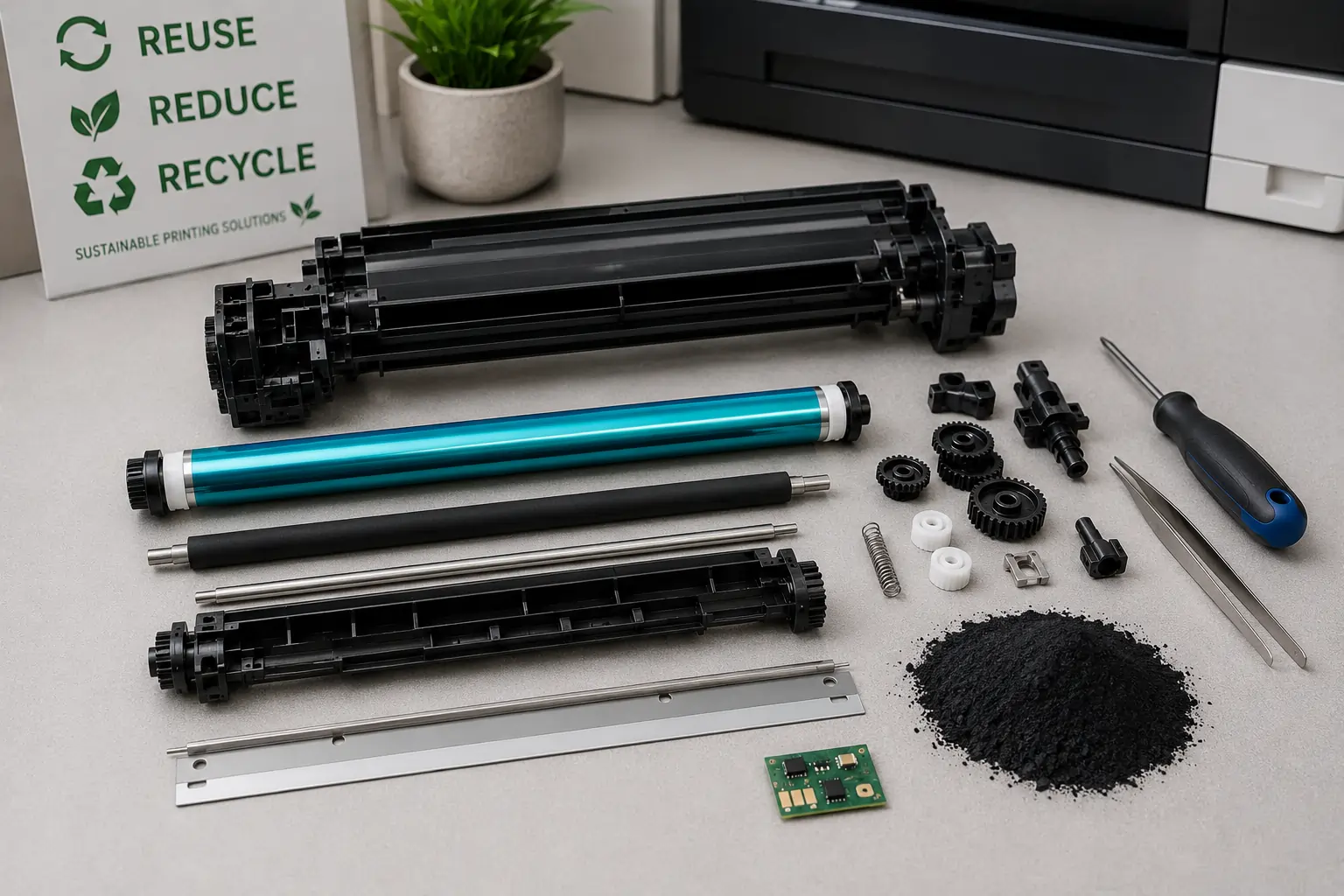
Several toner cartridge components are commonly reused and resold.
Drum Units
Drum units are essential imaging components responsible for transferring toner onto paper.
Reusable drum units may be:
- Refurbished
- Replaced during remanufacturing
- Sold separately for compatible printers
Toner Cartridge Chips
Smart chips are often reused or replaced to maintain printer communication and toner monitoring.
Rollers and Blades
Magnetic rollers and wiper blades are important for toner distribution and print quality.
Plastic Cartridge Housing
Some cartridge shells are reused during remanufacturing programs to reduce waste.
These reusable components help support more sustainable printing practices.
Why Businesses Sell Toner Cartridge Parts?
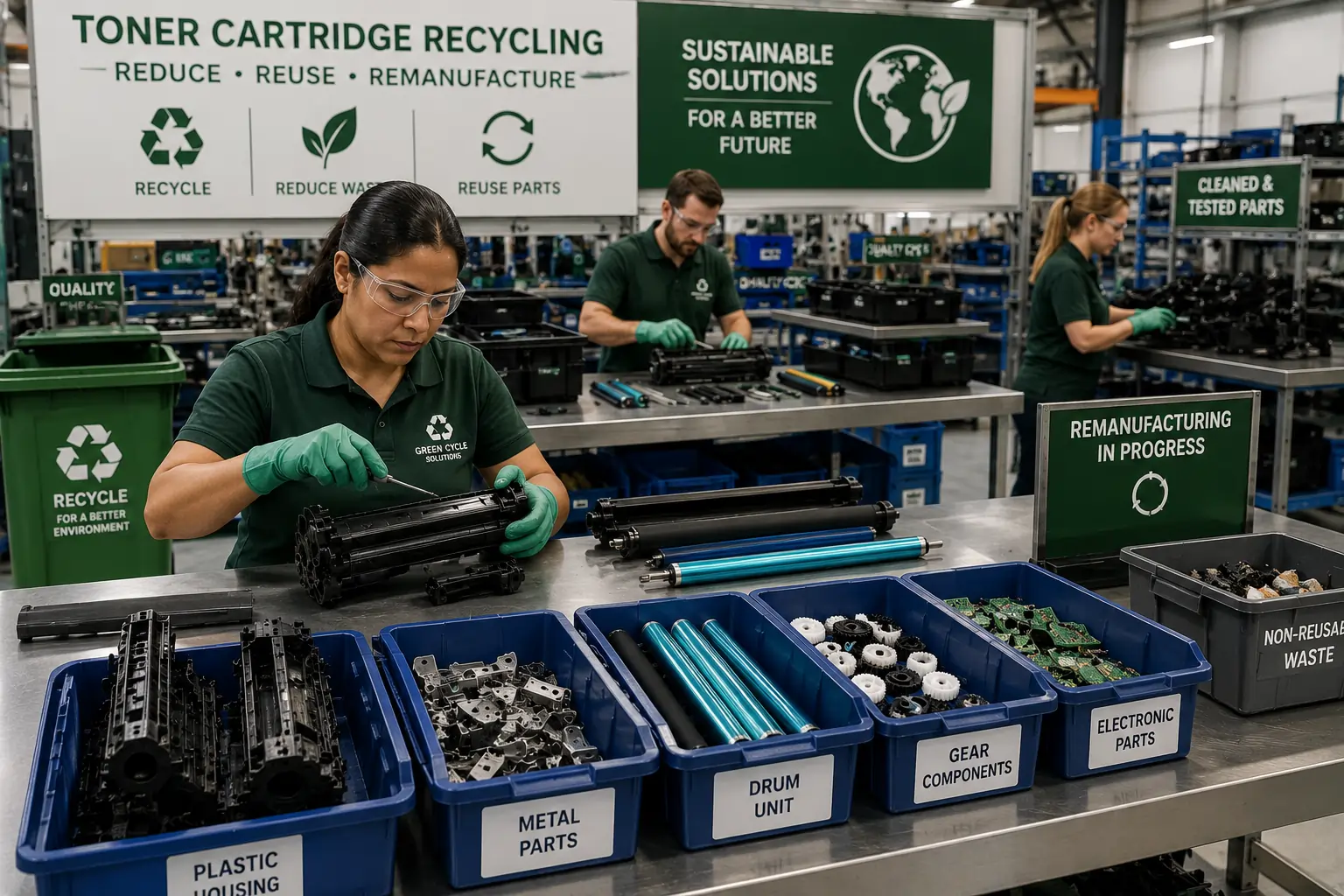
The toner cartridge parts market continues growing for several reasons.
Lower Manufacturing Costs
Reusing functional parts reduces production expenses for remanufactured cartridges.
Environmental Benefits
Recycling toner cartridge parts helps reduce:
- Plastic waste
- Electronic waste
- Landfill accumulation
Supply Chain Support
Reusable parts can help address shortages in printing supply chains.
Printer Repair Demand
Some printer repair companies use replacement cartridge parts to restore printing performance.
Businesses looking for reliable toner cartridge solutions can explore products from Toner Connect for compatible toner cartridges and printing supplies.
Legal Concerns When Selling Toner Cartridge Parts
While selling parts is generally legal, there are important legal considerations sellers should understand.
Trademark Protection
Sellers cannot falsely advertise used or rebuilt parts as brand new OEM products.
Counterfeit Products
Counterfeit toner components may violate intellectual property laws.
Consumer Transparency
Buyers should clearly understand whether parts are:
- Used
- Refurbished
- Compatible
- OEM
- Remanufactured
Clear labeling helps maintain legal compliance and customer trust.
The Role of Remanufactured Toner Cartridges
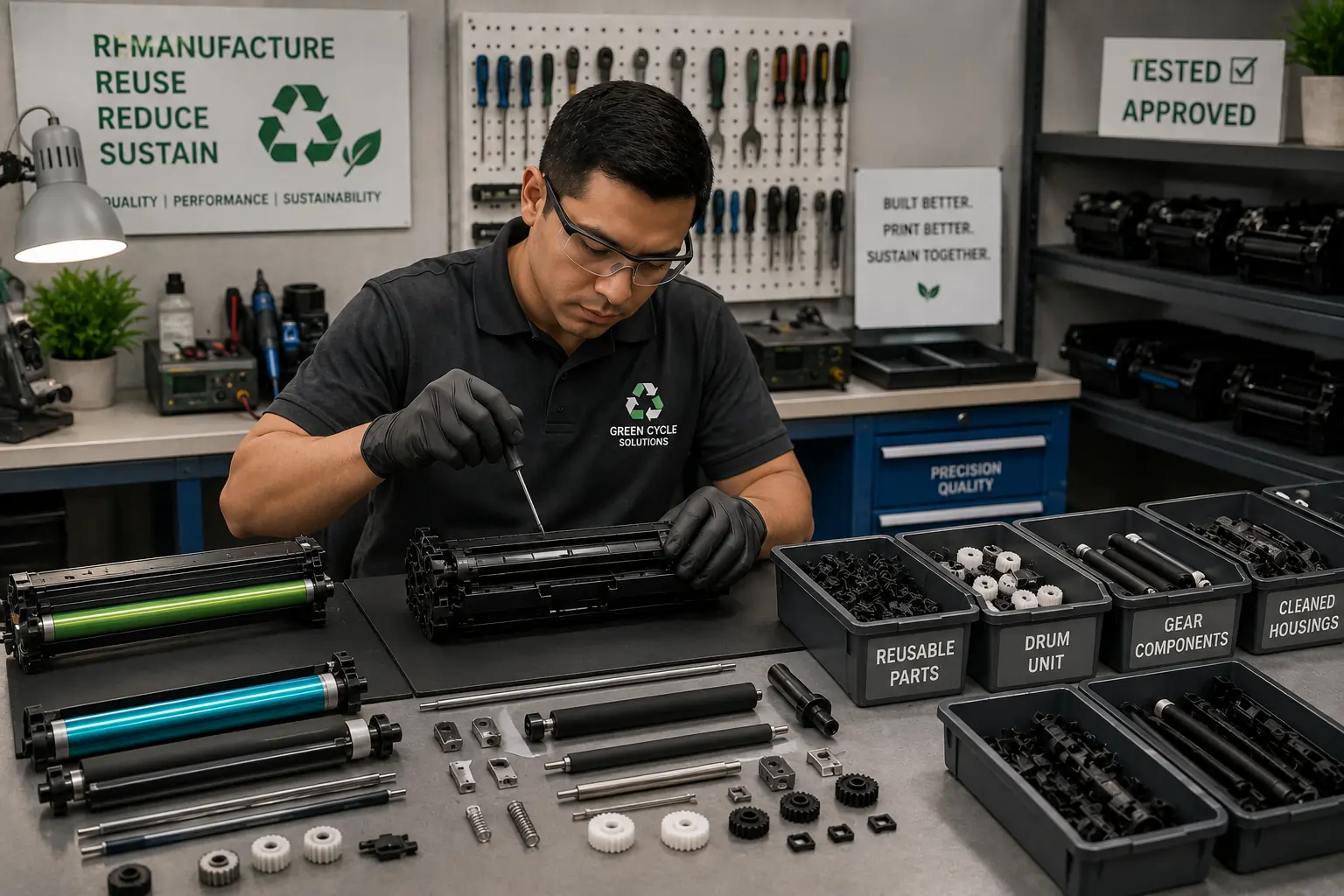
Remanufacturing plays a major role in the toner cartridge industry.
What Is Remanufacturing?
Remanufacturing involves:
- Cleaning used cartridges
- Replacing worn components
- Refilling toner
- Testing print performance
Many reusable cartridge parts are recovered during this process.
Environmental Impact
Remanufacturing helps reduce the number of cartridges entering landfills each year.
Cost Savings
Businesses often choose remanufactured cartridges because they offer lower printing costs while supporting sustainability efforts.
How Toner Cartridge Parts Support Sustainability?
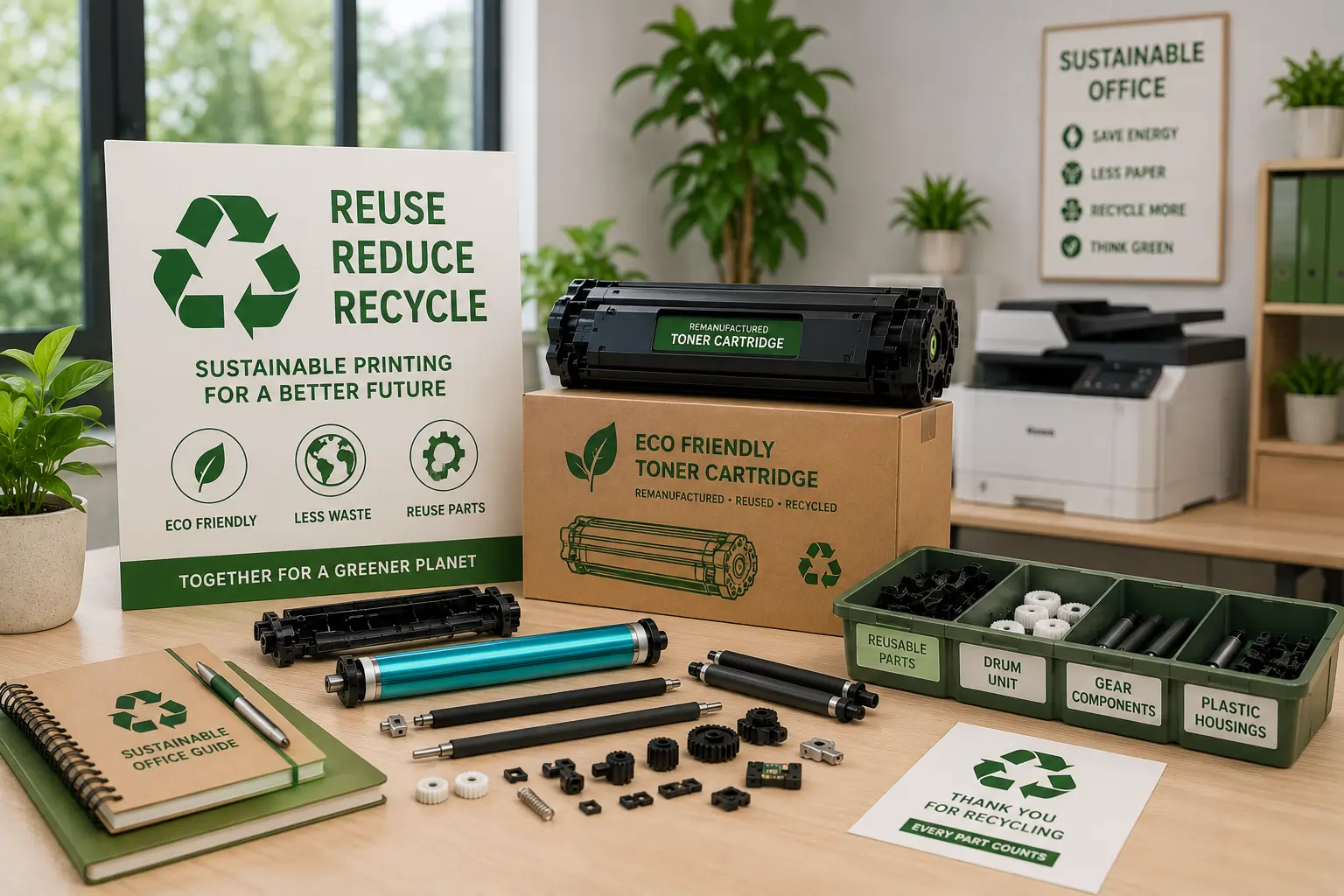
The reuse of toner cartridge parts supports eco friendly printing initiatives.
Benefits Include:
- Reduced electronic waste
- Lower plastic consumption
- Less raw material usage
- Reduced manufacturing emissions
- Extended product lifespan
As environmental awareness increases, more businesses are supporting cartridge recycling and reuse programs.
Challenges in the Toner Cartridge Parts Market
Despite growing demand, selling and reusing toner cartridge parts also presents challenges.
Quality Control
Used components must be carefully tested before resale.
Compatibility Issues
Different printer models require highly specific cartridge components.
Counterfeit Risks
Low quality counterfeit parts can affect printer reliability.
Firmware Restrictions
Some modern printers use firmware systems that may limit compatibility with reused chips or components.
Reliable suppliers and professional remanufacturing standards help reduce these risks.
The Future of Toner Cartridge Recycling and Reuse
The future of the printing industry is becoming increasingly focused on sustainability and resource efficiency.
Future developments may include:
- Improved cartridge recycling systems
- More reusable cartridge designs
- Better remanufacturing technology
- Smarter toner cartridge tracking
- Increased eco friendly regulations
According to HP and Canon sustainability programs, printer manufacturers continue investing in recycling and environmentally responsible printing technologies.
Conclusion
Selling parts of toner cartridges is generally legal when the components are obtained and marketed properly. From drum units and toner chips to reusable cartridge housing, many toner cartridge parts continue serving valuable purposes in recycling, remanufacturing, and printer repair industries. As businesses and consumers focus more on sustainability, the reuse of toner cartridge components will likely continue growing as an important part of environmentally responsible printing practices.