
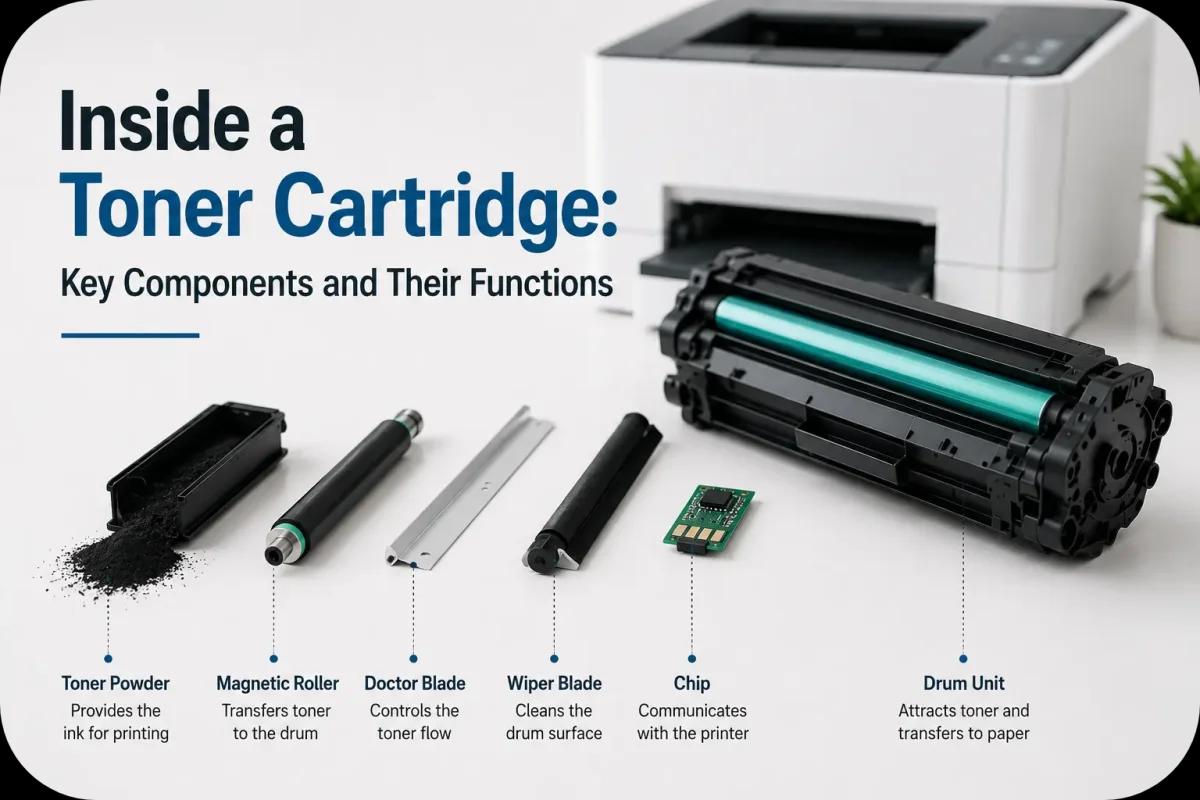
Inside a Toner Cartridge: Key Components and Their Functions
Toner cartridges may look simple from the outside, but inside they contain several carefully engineered components that work together to produce clean, sharp, and professional quality prints. Modern laser printers rely heavily on these internal cartridge systems to transfer toner accurately onto paper while maintaining consistent print performance.
Understanding the key components inside a toner cartridge can help users better maintain their printers, troubleshoot print quality issues, and appreciate the technology behind modern laser printing. From toner powder and drum units to smart chips and rollers, every part inside a toner cartridge has an important role in the printing process.
As laser printing technology continues evolving, toner cartridges are becoming more advanced, efficient, and reliable than ever before.
What Is a Toner Cartridge?
A toner cartridge is a replaceable printer component used in laser printers and multifunction printers. Unlike ink cartridges that use liquid ink, toner cartridges contain fine powder called toner.
During printing, the toner is:
- Electrically charged
- Transferred onto paper
- Heated and fused permanently onto the page
This process creates fast drying and highly durable printed documents.
Modern toner cartridges combine mechanical, electronic, and imaging technologies into one compact unit.
The Main Components Inside a Toner Cartridge
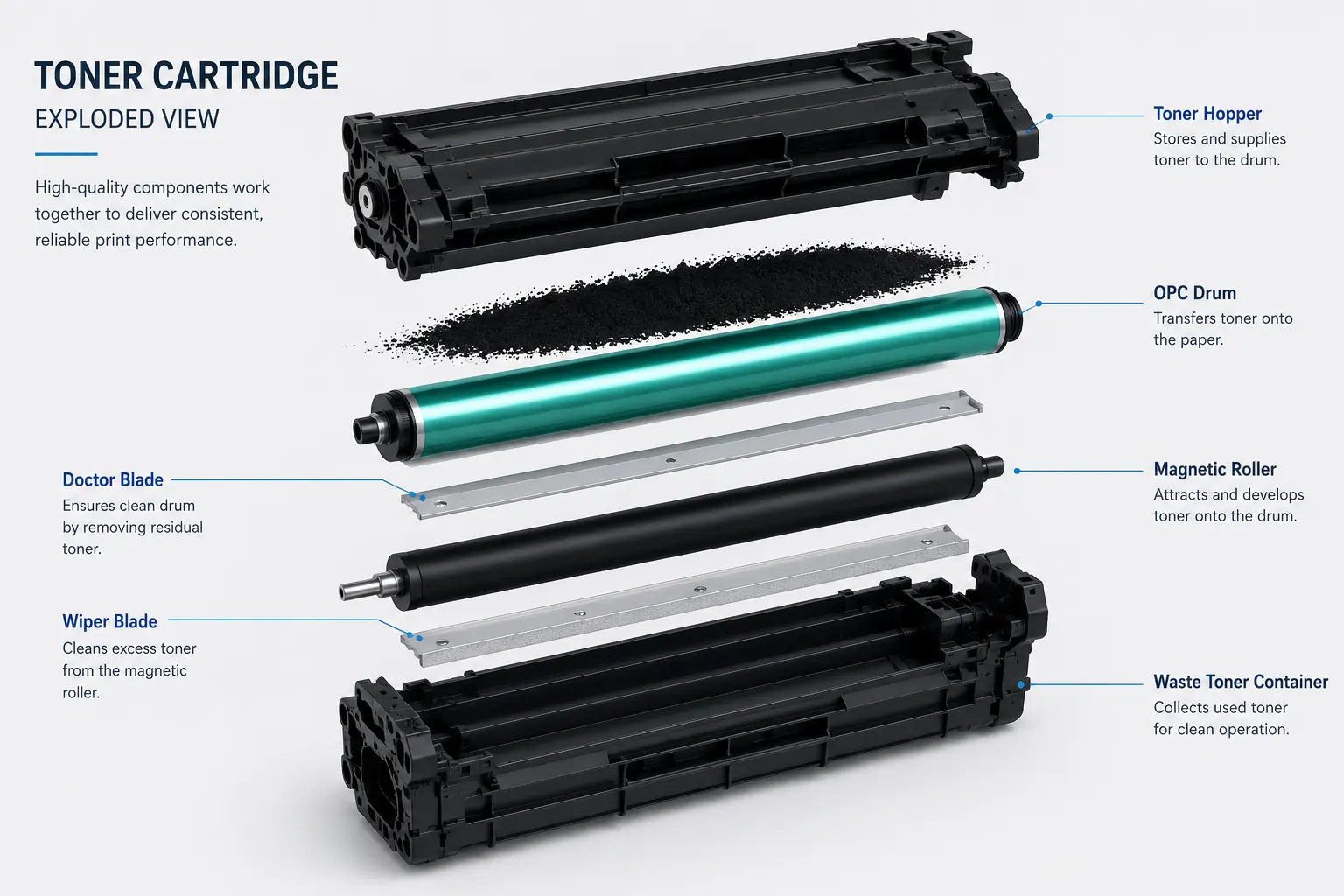
Several internal parts work together to ensure consistent toner transfer and print quality.
Toner Powder
Toner powder is the primary printing material inside the cartridge.
Modern toner consists of:
- Fine plastic particles
- Pigments for color
- Magnetic materials
- Charge control additives
When heated during printing, the toner bonds permanently to paper.
Drum Unit
The drum unit is one of the most important components inside a toner cartridge.
Function of the Drum:
- Receives electrical charges
- Attracts toner particles
- Transfers toner onto paper
The drum is highly sensitive and can directly affect print quality if damaged or dirty.
Magnetic Roller
The magnetic roller helps move toner from the cartridge reservoir to the drum surface.
Its Role Includes:
- Distributing toner evenly
- Controlling toner flow
- Supporting consistent print density
A damaged magnetic roller may cause streaks or uneven printing.
Doctor Blade
The doctor blade regulates the amount of toner applied to the magnetic roller.
Purpose:
- Prevents excessive toner use
- Maintains smooth toner distribution
- Improves print consistency
Improper doctor blade function may lead to smudging or toner buildup.
Wiper Blade
The wiper blade cleans excess toner from the drum after each print cycle.
Benefits:
- Prevents toner buildup
- Reduces ghosting effects
- Maintains clean printing surfaces
A worn wiper blade can create streaks and dirty prints.
Smart Components in Modern Toner Cartridges
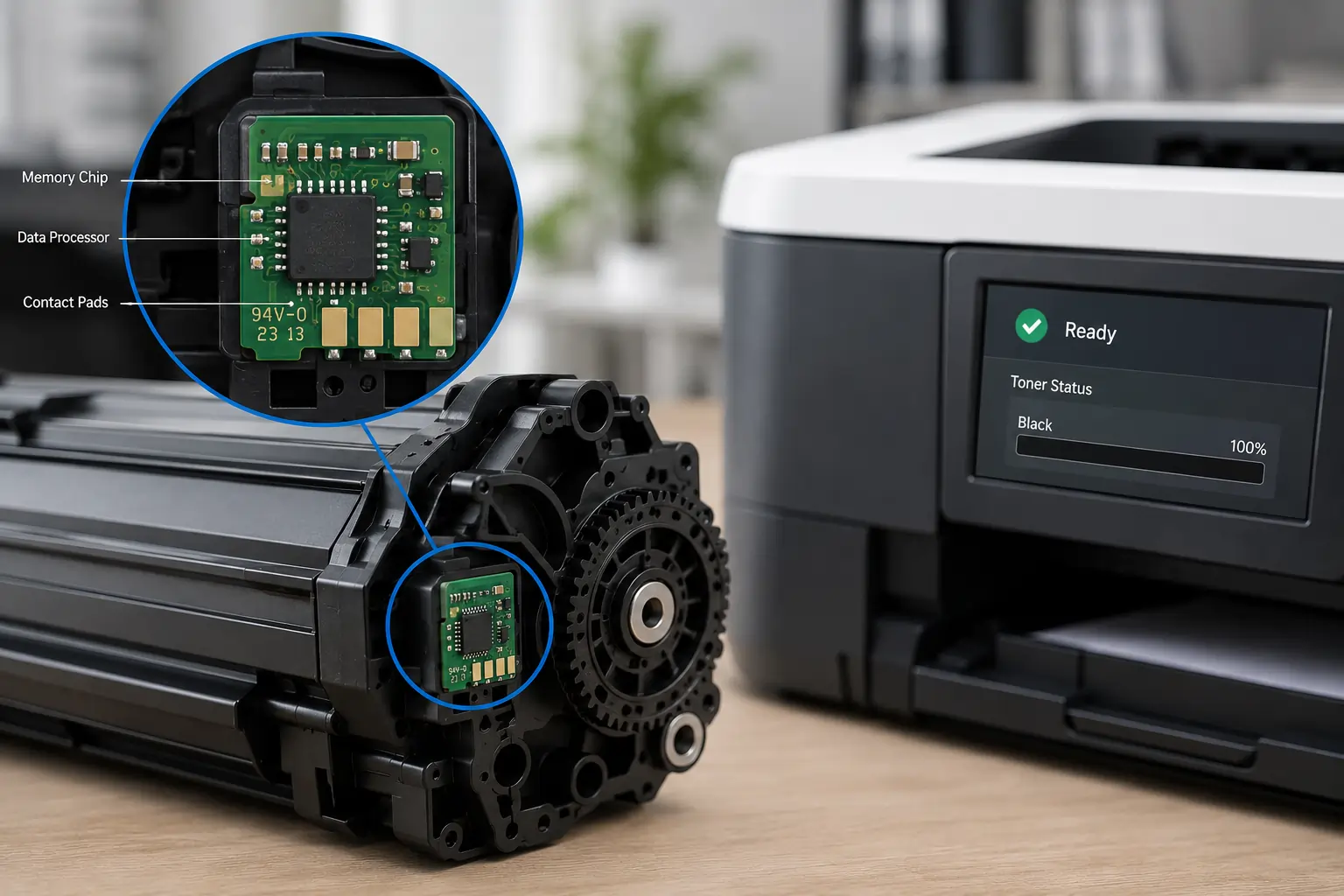
Modern toner cartridges now include advanced electronic systems that improve printer communication and efficiency.
Toner Cartridge Chip
Smart toner chips communicate directly with the printer.
Functions Include:
- Toner level monitoring
- Cartridge authentication
- Printer compatibility verification
- Usage tracking
These chips help improve reliability and reduce printing errors.
Sensors and Memory Systems
Some advanced cartridges store usage information and maintenance data to support smart printing systems.
How Toner Moves Inside the Cartridge During Printing?
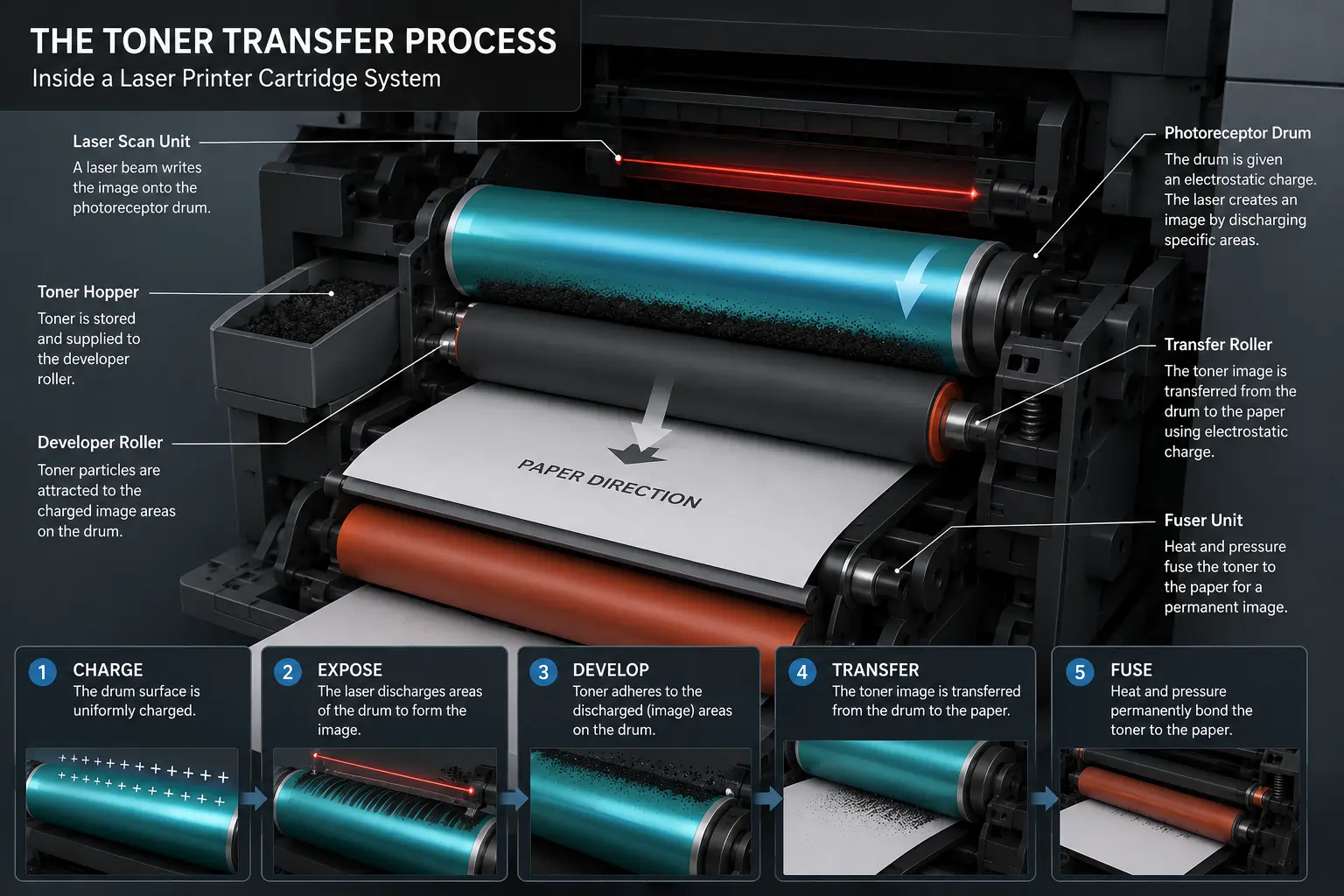
The printing process inside a toner cartridge follows several coordinated steps.
Step 1: Toner Distribution
The magnetic roller pulls toner powder from the cartridge reservoir.
Step 2: Toner Charging
The toner receives an electrical charge for controlled transfer.
Step 3: Drum Imaging
The drum attracts toner based on the printer’s laser imaging system.
Step 4: Paper Transfer
Toner transfers from the drum onto the paper surface.
Step 5: Heat Fusing
The printer fuser melts the toner permanently onto the page.
This process happens rapidly during every print job.
Why Toner Cartridge Components Matter for Print Quality?
Every component inside a toner cartridge affects print performance.
Sharp Text and Graphics
Precise toner distribution helps produce crisp and clean prints.
Consistent Toner Density
Balanced toner flow prevents faded areas and streaking.
Cleaner Printing
Proper cleaning blades reduce smudges and toner residue.
Printer Reliability
Well functioning cartridge components reduce printer stress and maintenance issues.
Businesses and home users using reliable toner supplies from Toner Connect can improve printing consistency and reduce cartridge related problems.
Common Problems Caused by Worn Cartridge Components
Over time, internal cartridge parts can wear out and affect print quality.
Drum Damage
Damaged drums may cause:
- Black streaks
- Repeated marks
- Faded prints
Worn Wiper Blades
Old blades may leave toner residue on printed pages.
Toner Leakage
Damaged seals or rollers can lead to toner spills inside the printer.
Cartridge Chip Errors
Faulty chips may trigger cartridge recognition issues.
Replacing worn cartridges helps maintain reliable print performance.
OEM vs Compatible Toner Cartridge Components
Both OEM and compatible toner cartridges use similar internal technologies, but manufacturing quality can vary.
OEM Cartridges
Advantages:
- Consistent component quality
- Guaranteed compatibility
- Manufacturer support
Compatible Cartridges
Advantages:
- Lower cost
- Competitive performance
- Wide printer compatibility
Reliable compatible cartridges from trusted suppliers can deliver strong print quality and efficiency.
Eco Friendly Improvements Inside Modern Toner Cartridges

Manufacturers are also improving toner cartridge sustainability.
Eco Friendly Innovations Include:
- Recyclable cartridge plastics
- Remanufactured cartridge programs
- Reduced toner waste systems
- Energy efficient toner formulas
These advancements support more environmentally responsible printing practices.
The Future of Toner Cartridge Technology
Toner cartridge technology continues evolving with smarter and more efficient designs.
Future innovations may include:
- AI powered toner monitoring
- More efficient toner formulas
- Fully recyclable cartridge systems
- Improved cloud printer integration
- Enhanced leak prevention technology
As laser printing systems become more advanced, toner cartridge components will continue improving print quality, efficiency, and sustainability.
According to HP and Canon, modern printing technology is increasingly focused on automation, efficiency, and environmentally friendly printing systems.
Conclusion
Modern toner cartridges contain a complex combination of mechanical, electronic, and imaging components that work together to produce reliable, high quality prints. From toner powder and drum units to smart chips and cleaning blades, every component inside a toner cartridge plays an important role in printing efficiency and performance. Understanding these internal systems helps users maintain better print quality, reduce printer issues, and make smarter decisions when choosing toner cartridges.