
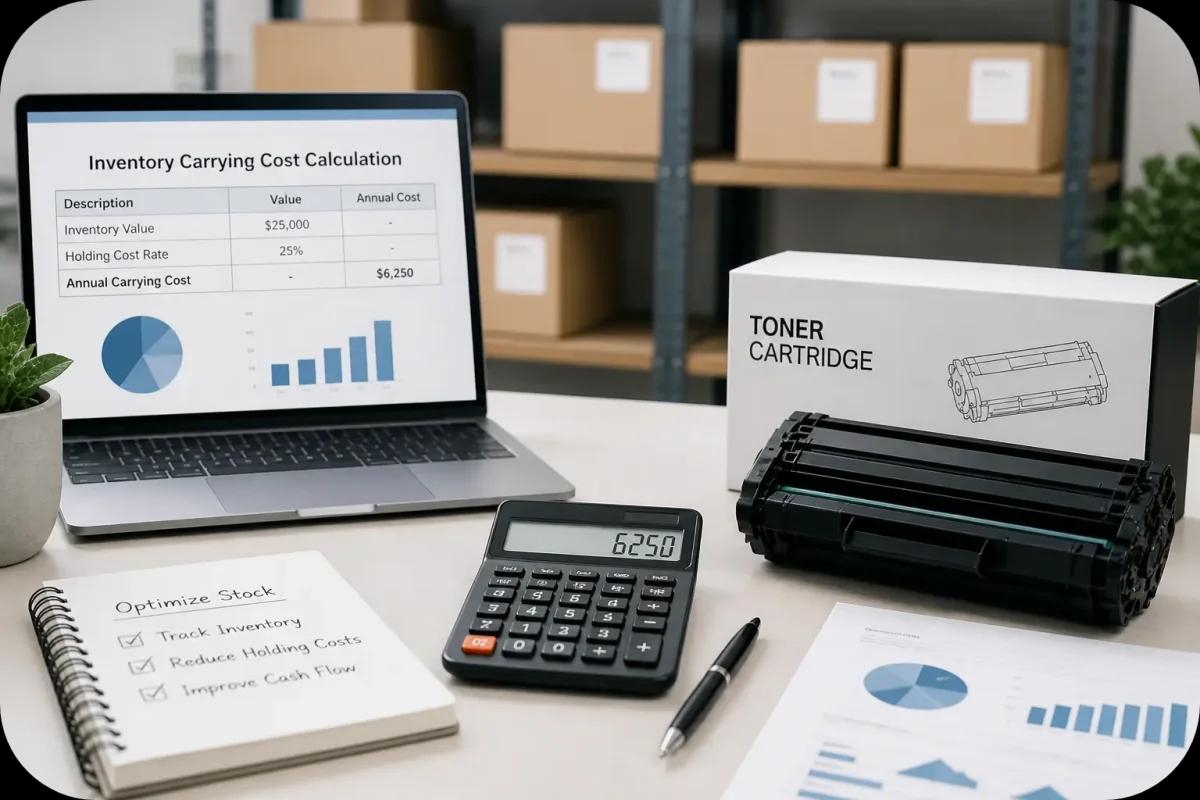
How to Calculate Toner Cartridges Inventory Carrying Costs and Cut Expenses While Optimizing Stock
Managing toner cartridge inventory is more than just keeping shelves stocked. Every unused box represents tied up capital, storage costs, and potential losses over time. Understanding how to calculate toner cartridges inventory carrying costs can help you cut unnecessary expenses and optimize your stock for better profitability.
In this guide, you will learn how to calculate these costs, identify inefficiencies, and apply practical strategies to improve your inventory management.
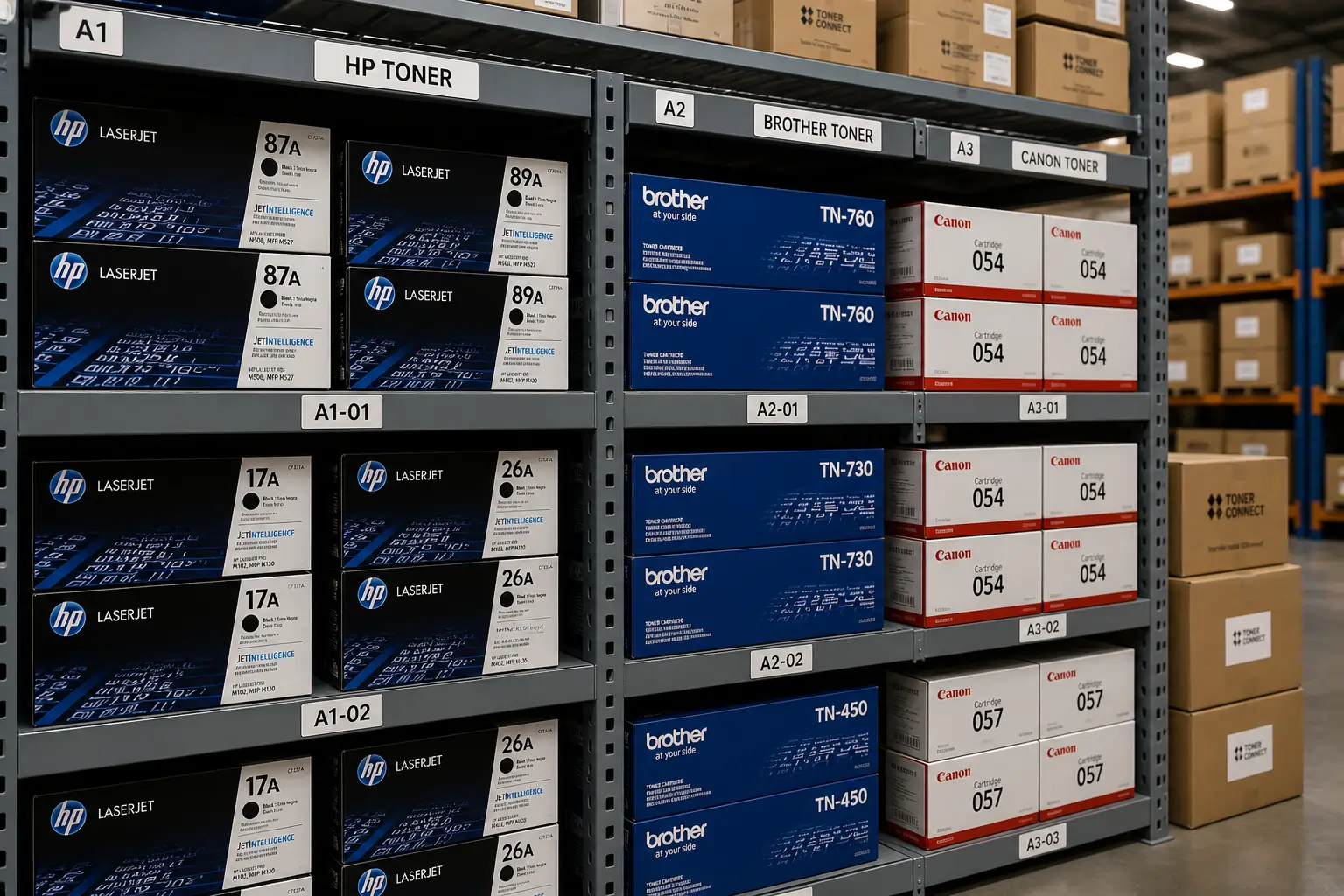
What Are Inventory Carrying Costs?
Inventory carrying costs refer to the total expense of holding unsold stock over a period of time. For toner cartridges, these costs can quietly add up and impact your bottom line.
Key Components of Carrying Costs
Carrying costs typically include:
- Storage costs such as warehouse space or office storage
- Insurance and security expenses
- Risk of damage, obsolescence, or expiration
- Opportunity cost of tied up capital
For toner cartridges, obsolescence is especially important since printer models change frequently.
Why Calculating Toner Inventory Costs Matters?
Prevent Overbuying
Knowing your carrying costs helps you avoid purchasing more toner than necessary.
Improve Cash Flow
Reducing excess inventory frees up capital that can be used elsewhere in your business.
Increase Profit Margins
Lower storage and waste costs directly improve your overall profitability.
Optimize Stock Levels
You maintain the right balance between supply and demand.
How to Calculate Toner Cartridges Inventory Carrying Costs?
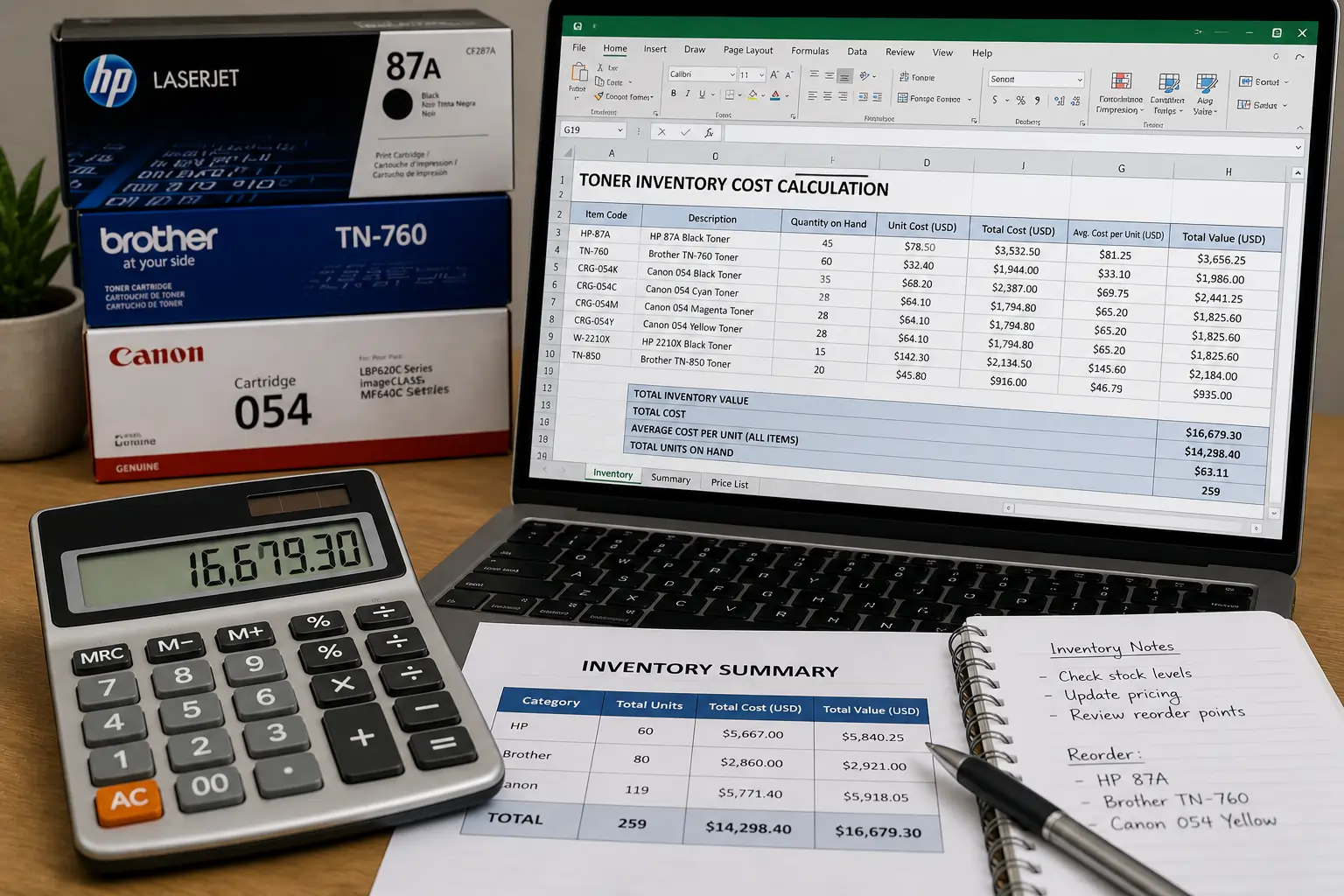
The basic formula for inventory carrying cost is:
Carrying Cost = Total Inventory Value × Carrying Cost Rate
Step 1: Determine Total Inventory Value
Add up the total value of all toner cartridges you currently hold.
Example:
If you have 200 cartridges worth 50 dollars each
Total Inventory Value = 10,000 dollars
Step 2: Estimate Carrying Cost Rate
This rate is usually expressed as a percentage and includes all holding costs. For most businesses, it ranges between 20 percent and 30 percent annually.
Example:
Carrying Cost Rate = 25 percent
Step 3: Calculate Total Carrying Cost
Using the formula:
10,000 × 0.25 = 2,500 dollars annually
This means you are spending 2,500 dollars per year just to hold that inventory.
Hidden Costs of Holding Excess Toner Inventory
Product Obsolescence
New printer models can make older toner cartridges harder to sell.
Storage Inefficiency
Unused toner takes up valuable space that could be used for faster moving products.
Price Depreciation
Toner value can decrease over time due to reduced demand.
Risk of Damage
Improper storage can lead to damaged packaging, reducing resale value.
Strategies to Cut Inventory Carrying Costs
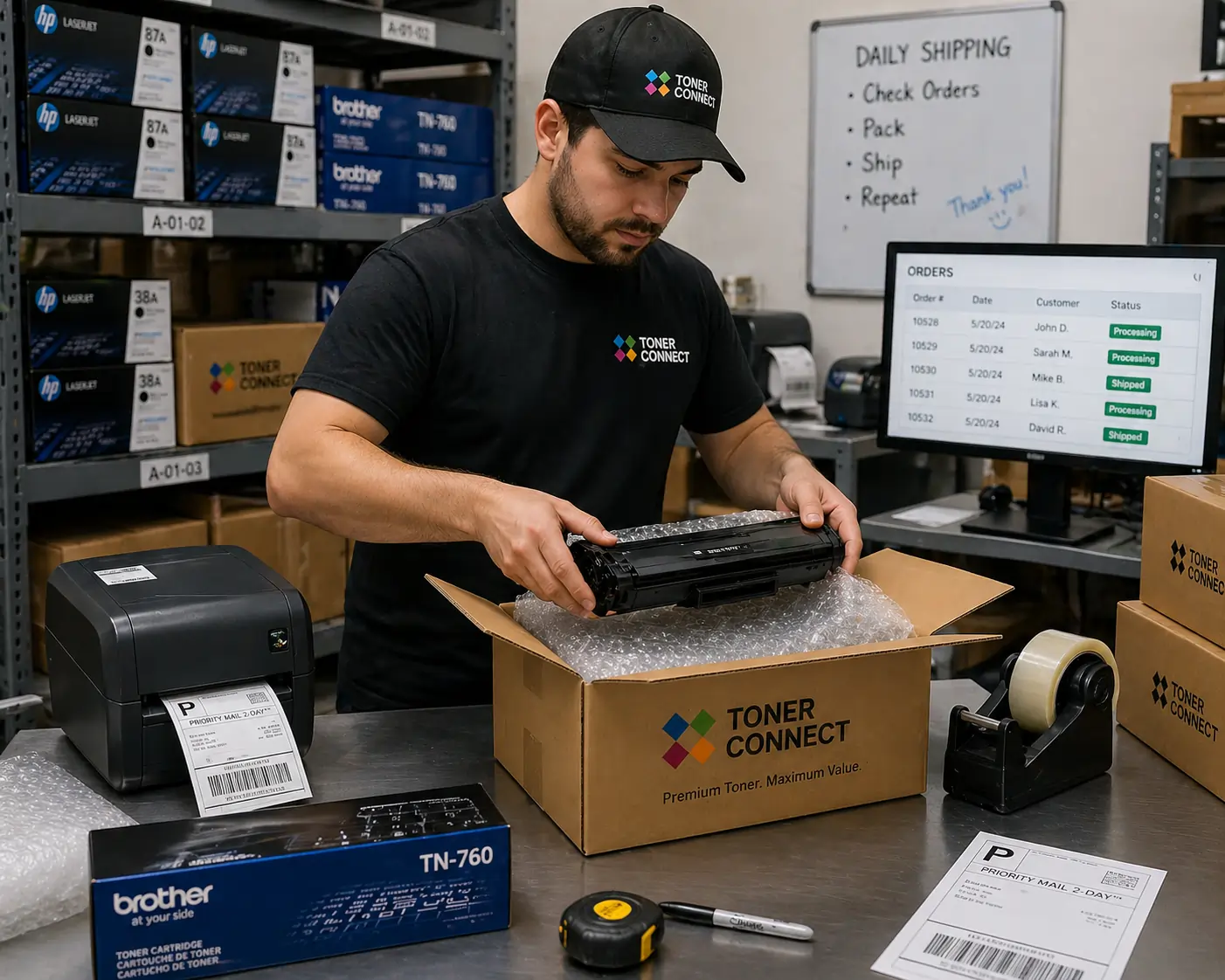
Sell Surplus Toner Quickly
One of the fastest ways to reduce carrying costs is to convert excess inventory into cash. Platforms like TonerConnect make it easy to sell unused toner cartridges.
Implement Just In Time Inventory
Order toner based on actual demand rather than forecasting too far ahead.
Track Inventory Performance
Identify slow moving items and take action before they lose value.
Negotiate Better Supply Terms
Work with suppliers to reduce bulk purchasing requirements.
How to Optimize Your Toner Stock Levels?
Analyze Usage Patterns
Review past consumption data to predict future needs more accurately.
Categorize Inventory
Separate fast moving and slow moving toner cartridges to manage them differently.
Set Reorder Points
Establish minimum stock levels to avoid overstocking.
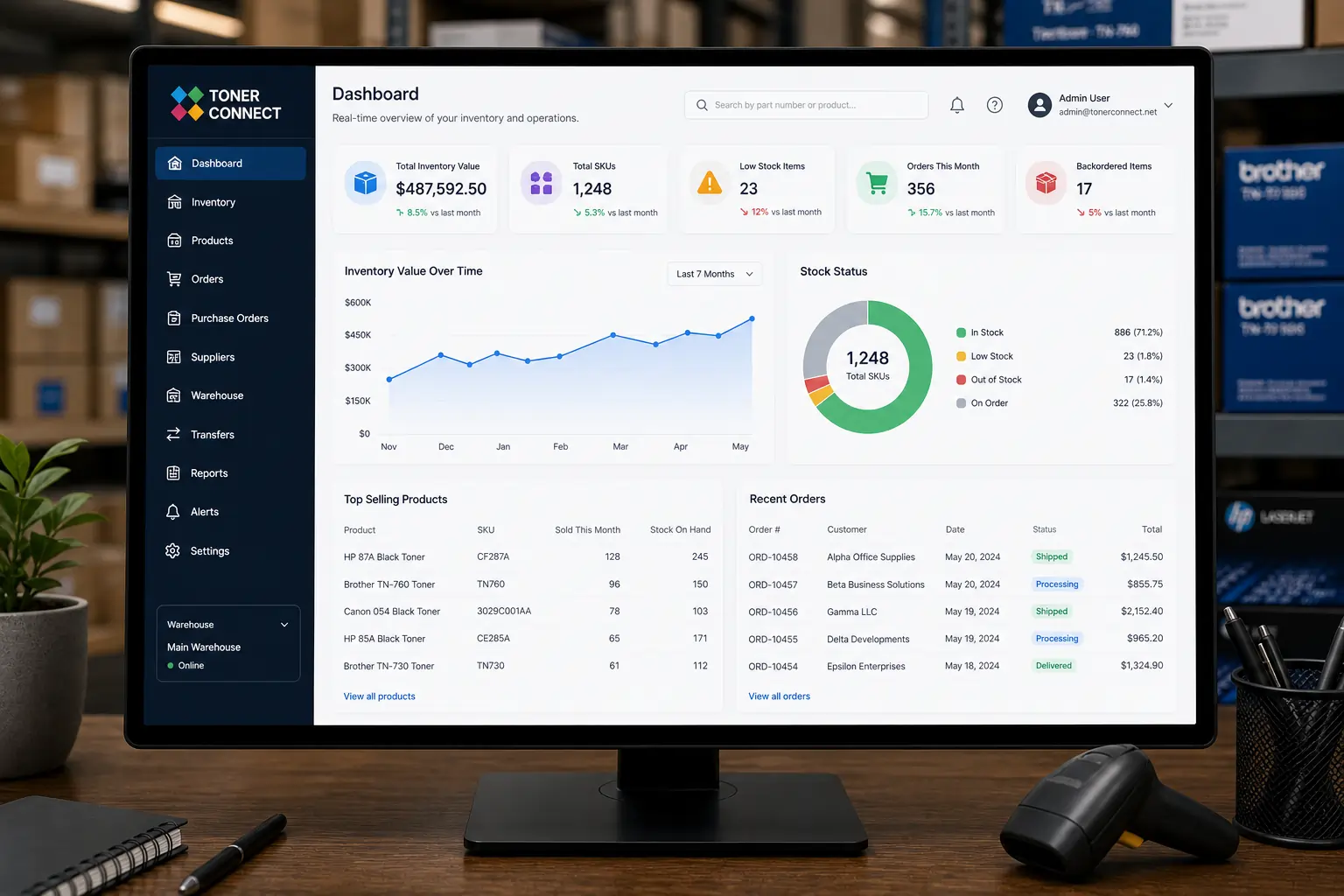
Use Inventory Management Tools
Digital tools help track stock in real time and reduce human error.
Leveraging Buyback Programs to Reduce Costs
Buyback programs play a key role in inventory optimization.
Turn Excess Stock into Revenue
Instead of letting toner sit unused, sell it through a trusted platform like TonerConnect.
Reduce Storage Burden
Selling surplus inventory frees up space and reduces overhead costs.
Maintain Lean Inventory
Regularly offloading excess stock keeps your inventory efficient.
Explore toner buyback options at TonerConnect
Environmental Benefits of Optimized Inventory
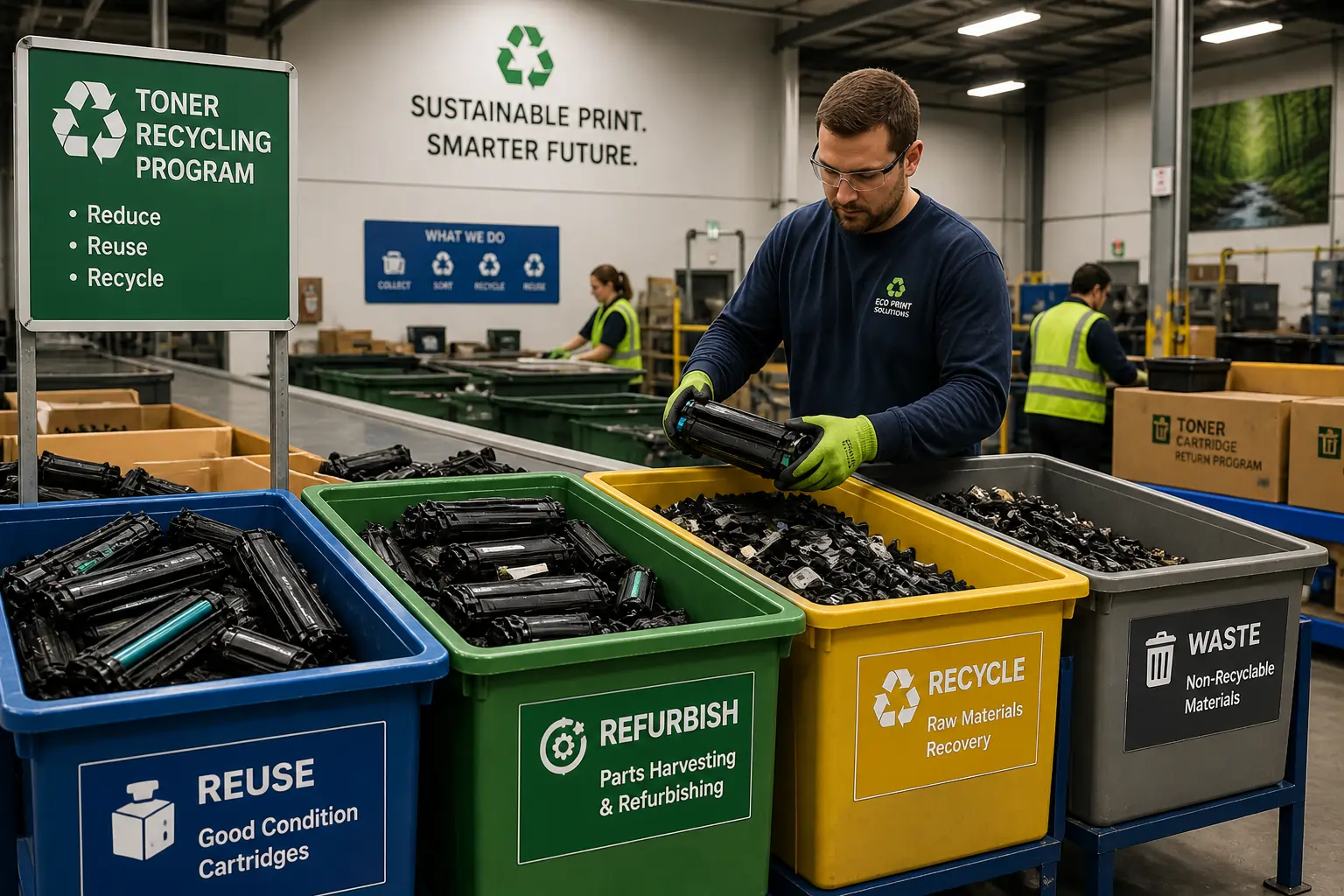
Reducing excess toner inventory is not just a financial decision. It also benefits the environment.
Minimize Waste
Unused toner is less likely to end up in landfills.
Support Recycling Efforts
Many buyback programs ensure proper recycling of unsellable items.
Promote Sustainable Business Practices
Efficient inventory management aligns with eco friendly goals.
Common Mistakes to Avoid
Ignoring Carrying Costs
Many businesses underestimate how much it costs to hold inventory.
Overstocking
Buying in bulk without demand leads to higher expenses.
Delayed Decision Making
Waiting too long to sell surplus toner reduces its value.
Lack of Tracking Systems
Without proper tracking, inventory inefficiencies go unnoticed.
Conclusion
Calculating toner cartridges inventory carrying costs gives you a clear picture of how much your stock is really costing your business. By identifying inefficiencies and taking action, you can cut expenses, improve cash flow, and optimize your inventory.
With smart strategies and tools like TonerConnect, managing your toner inventory becomes more efficient and profitable. The key is to stay proactive, monitor your stock regularly, and make informed decisions that support both financial and operational success.